


Used Detroit Diesel Engines for Sale – Tested, Warrantied & Shipped Worldwide
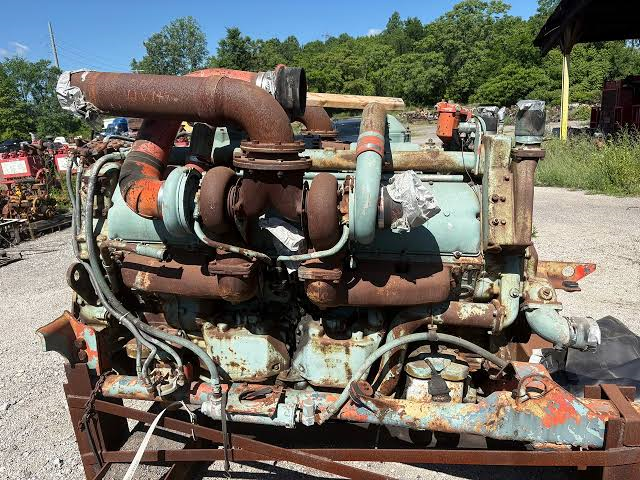
Detroit Diesel has a following that borders on stubborn loyalty, and once you’ve worked around one of these engines for a while, it’s easy to understand why. The two-stroke Detroits — the 6V92, 8V92, and the Series 60 that followed — earned a reputation as engines you could beat on for a decade and they’d still fire up on a cold morning. When one of these needs replacing, most owners aren’t hunting for something new. They’re hunting for a solid used Detroit Diesel engine with real hours documented and no surprises.
We source used Detroit Diesel engines out of retired highway tractors, marine applications, and industrial equipment where the chassis or hull gave out long before the engine did. That’s the nature of these platforms — the block often has years of service life left even after everything bolted around it is done.
Why a used Detroit Diesel engine makes sense
New replacement diesels in this class are expensive and, depending on the model, not always straightforward to source — Detroit Diesel’s engine lineup has shifted ownership and production over the years, which makes certain new units harder to get than you’d expect. A tested used engine sidesteps that problem entirely and typically costs a fraction of a new unit once you account for freight and labor on either option. For fleet operators keeping older equipment running past its expected life, that math matters.
There’s also a lead-time reality that catches a lot of buyers off guard. Sourcing a new engine for an older Detroit-powered chassis can mean waiting on parts that aren’t in regular production anymore, sometimes for weeks. A used engine that’s already tested and sitting in inventory can ship within days, which matters when idle equipment isn’t earning anything.
How to confirm exactly which Detroit Diesel engine you need
Detroit Diesel engines carry a serial number and model designation on a data plate mounted on the block, typically on the side or the front cover depending on the series. Don’t assume the badge tells the whole story — trucks and equipment get repowered over their service life more often than most owners expect, and the engine in front of you may not be what the original build sheet says. The serial number is the only reliable way to confirm what you’re actually working with.
If the plate is missing or worn illegible, send us the chassis details, application, and any partial numbers you can make out, and we’ll work through identification with you before you commit to an order. Getting this confirmed up front avoids the single most common and most expensive mistake in used engine buying.
Detroit Diesel engines we get asked about most
Detroit Diesel Series 60 (11.1L / 12.7L / 14.0L)
- Displacement: 11.1L, 12.7L, or 14.0L depending on version
- Configuration: inline-6, four-stroke, turbocharged, electronic unit injection
- Output: 330–500 hp depending on displacement and tune
- Common applications: Freightliner, Western Star highway tractors, industrial power units
- Known for: being one of the most widely used heavy-duty highway diesels of the 1990s and 2000s, with a huge installed base and strong parts availability
Detroit Diesel 6V92 / 8V92 (two-stroke)
- Configuration: V6 or V8, two-stroke diesel, Roots-blown, optional turbocharging
- Output: 250–450 hp depending on configuration
- Common applications: highway trucks, buses, marine vessels, generators
- Known for: the distinct two-stroke sound and a mechanical simplicity that keeps these engines running in marine and industrial settings decades after production ended
Detroit Diesel DD15 / DD13
- Displacement: DD15 at 14.8L, DD13 at 12.8L
- Configuration: inline-6, turbocharged, common rail, modern emissions equipment
- Output: DD15 up to 505 hp, DD13 up to 505 hp depending on rating
- Common applications: Freightliner Cascadia and current Detroit-powered highway tractors
- Known for: being the modern backbone of Freightliner’s heavy-duty lineup, with strong fuel economy for the class
Detroit Diesel 60 Series marine and industrial variants
- Common applications: commercial marine vessels, standby and prime power generators, pumping stations
- Known for: long duty cycles at steady RPM, which tends to be gentler on internals than stop-and-go highway use
Detroit Diesel 8.2L Fuel Pincher (naturally aspirated V8)
- Displacement: 8.2L
- Configuration: V8, four-stroke, naturally aspirated or turbocharged variants
- Common applications: transit buses, older medium-duty trucks
- Known for: being a relatively simple, low-stress design that’s easy to source parts for in the transit and municipal fleet world
Quick comparison: which Detroit Diesel fits which application
| Engine | Displacement | Best for |
|---|---|---|
| Series 60 | 11.1–14.0L | Highway tractor, industrial power |
| 6V92/8V92 | varies | Highway truck, marine, generator |
| DD15/DD13 | 12.8–14.8L | Modern Freightliner highway tractor |
| 60 Series marine | varies | Commercial marine, standby power |
| 8.2L Fuel Pincher | 8.2L | Transit bus, medium-duty truck |
Long block, complete engine, or bare block — what you’re getting
Every listing states clearly which of these you’re buying, because the difference matters to your budget and your labor time. A bare block is just the casting, intended for a full rebuild. A long block includes the block, head, crankshaft, and camshaft assembled but not bolt-on accessories like the turbo or injection components. A complete engine includes the accessories and is closer to a drop-in replacement, though sensor and harness transfer from your old unit is still typically required. If it’s not obvious from the listing which you’re getting, ask before you order.
What we check before a Detroit Diesel engine gets listed
Every used Detroit Diesel engine we sell goes through a compression test, a visual inspection of the block, head, and injector cups for cracks or damage, and a check for oil and coolant cross-contamination. Where hour meters or mileage logs are available from the source equipment, we document them. Where they aren’t, we tell you that plainly instead of estimating a number that sounds better than it is.
Each engine ships with a written condition report and a warranty covering internal mechanical failure for a set period after delivery. If our testing missed something, we make it right — that’s not negotiable on our end.
Signs you need a replacement rather than a repair
Not every issue calls for a full engine swap. Injector problems, a failing turbo, or a leaking gasket are component-level repairs that are almost always cheaper to fix directly than replace the whole engine. Persistent smoke that doesn’t clear, metal shavings in the oil, a knock under load, or a cracked block are the signals that point toward replacement being the more sensible route. If you’re not sure which category you’re in, describe what you’re seeing when you reach out and we’ll give you a straight answer.
Shipping used Detroit Diesel engines worldwide
These are big, heavy units — a Series 60 alone weighs close to 2,300 lbs dry — so shipping is planned around that from the start. Domestic deliveries typically move by truck freight on a reinforced pallet; international orders get crated for ocean freight, with air freight available for urgent smaller components. Engines are drained of fluids and secured before leaving our facility. For international buyers, we provide the commercial invoice and documentation your customs broker will need. Tell us your destination and we’ll quote actual freight costs rather than a rough estimate.
For a DD15 or larger Series 60 configuration, crating weight adds real cost, so we build that into your quote from the outset instead of surprising you at invoice time. Fleet buyers ordering multiple units should ask about consolidated container shipping, which usually beats separate shipments on a per-unit basis.
What to check when your engine arrives
Inspect the crate for signs of rough handling before signing for delivery — a scuff isn’t a problem, a crushed corner or visible impact damage is worth documenting with photos immediately. Once unpacked, verify the serial number matches your order, confirm listed accessories are present, and rotate the engine by hand where possible to check it turns freely. Any discrepancy should be reported right away with photos rather than after installation has started.
How to order
- Give us the engine model and, if you have it, the serial or unit number.
- We confirm what’s in stock, hours or mileage where known, testing results, and price.
- You get photos and, where the application allows it, a run video or compression readout.
- We crate and ship to your address, yard, or port.
- You inspect on arrival and confirm receipt — the warranty period begins from delivery.
For current production models and factory specifications, Detroit’s own product page under Daimler Truck is worth checking against whatever we quote you.
Why Detroit Diesel earned its reputation
Detroit’s engineering history goes back to the two-stroke diesels developed for military and industrial use well before the Series 60 became a highway staple. The two-stroke design, with its distinct Roots-blower induction, was built around mechanical simplicity and durability under sustained heavy load — qualities that still show up today in why so many 6V92 and 8V92 units keep running in marine and generator applications decades after they left the factory. The Series 60 that followed moved to a four-stroke, electronically controlled design that traded some of that mechanical simplicity for better fuel economy and emissions performance, without losing the underlying reputation for heavy-duty reliability.
That legacy carries real weight in resale value. A Series 60 or DD15 core in good condition holds value better than a lot of comparable engines from other manufacturers, which is part of why we can offer core credit on select higher-value units.
Detroit Diesel compared to the competition
If you’re cross-shopping, a Series 60 sits close to a Cummins ISB/M11 or a Caterpillar C15 in the highway diesel space. Detroit’s parts network has historically been strong within the Freightliner and Daimler Truck ecosystem, given the shared ownership, which can make sourcing easier if you’re already running a Freightliner fleet. Compared to a two-stroke Detroit like the 6V92, a Cummins 6BT of similar era offers more electronics-free simplicity for owners who want to avoid the two-stroke’s specific maintenance quirks (unique oil consumption characteristics, blower maintenance), while the Detroit two-stroke tends to win out for buyers already deep into that platform’s parts and service ecosystem.
Common Detroit Diesel failure points worth knowing about
Being straightforward about known weak spots is part of selling honestly. On the two-stroke 6V92/8V92 engines, blower seal and bearing wear is a known maintenance item as hours climb — we check blower condition on these units before listing. On the Series 60, injector and EGR-related issues show up on higher-mileage or later-emissions-era units; we test and disclose rather than gloss over these. On the DD15/DD13, aftertreatment system health (DPF, SCR) matters for a functioning unit in current emissions-regulated markets — we note the condition of this equipment where the source application allows inspection.
Maintenance after installation
Treat the first several hundred hours or miles after a Detroit Diesel swap as a break-in period, especially if internal machine work was involved. Change the oil and filter earlier than standard interval to flush installation debris. Watch coolant levels and hose connections closely in the first weeks — loose clamps from the install are a common, easily preventable source of early trouble. Beyond that, these engines reward consistent oil change intervals, clean fuel, and attention to the cooling system, which is what gets them to the extended service lives they’re known for.
Installing a used Detroit Diesel engine: notes for your mechanic
If someone else is handling the swap, a few Detroit-specific details are worth passing along. On two-stroke installs, blower drive alignment and gear lash need checking during reassembly — this isn’t a plug-and-play situation the way some four-stroke swaps can be. On Series 60 and DD15/DD13 installs, ECM programming needs to match the vehicle’s existing systems, particularly for emissions-regulated applications where a mismatch can trigger fault codes or prevent the truck from passing inspection. Having documentation from the donor application on hand during installation saves real diagnostic time.
Why buyers keep coming back to us for Detroit Diesel engines
Detroit Diesel is a platform we handle regularly enough that our team has actually worked through the quirks — two-stroke blower service intervals, Series 60 injector patterns, DD15 aftertreatment health — rather than reciting specs off a catalog page. That experience is the difference between a generic listing and someone who can actually answer a specific question about your application.
We’d also rather have an honest conversation about whether a used engine is the right move for your situation than push a sale that doesn’t make sense. If your current engine’s problem is a fixable component rather than internal damage, we’ll say so directly. Building that kind of trust matters more to us long-term than any single transaction.
Payment and lead times
Engines currently in stock typically ship within a few business days of payment clearing. Sourced units not currently on our shelf but available through our network usually take one to three weeks depending on the specific engine and your location. We give you a realistic timeline upfront rather than an optimistic one meant to close a sale faster.
Financing and payment options
We accept standard payment methods for both domestic and international orders. For larger fleet purchases involving multiple engines, we can work out payment terms that fit a multi-unit order rather than forcing everything through one upfront transaction. If you’re financing through your own lender or a business credit line, we’ll provide whatever documentation your financing process requires — invoices, specifications, and condition reports for the specific unit you’re purchasing.
Frequently asked questions
Will a used Detroit Diesel engine fit my truck without major modification?
Within the same engine family and close model years, usually yes. Mounts, ECM programming, and emissions hardware can differ across years, so send us your chassis and engine details and we’ll confirm fitment first.
How many hours are typically on these engines?
It depends on the source unit. Highway tractor engines often come off retirement in the 500,000–750,000-mile range and still have meaningful life left; marine and generator units are usually lower-hour given their duty cycle.
Can you supply multiple units for a fleet order?
Yes, we regularly handle multi-engine orders for fleets and equipment operators, not just single-unit sales.
Do you offer core credit for older Detroit units?
On select high-value units like the Series 60 and DD15, yes. Ask when placing your order and we’ll confirm if your unit qualifies.
What’s involved in maintaining a two-stroke Detroit Diesel long-term?
Two-stroke Detroits need attention to blower condition and specific oil consumption characteristics that differ from a standard four-stroke diesel. If you’re new to two-strokes, we’re happy to walk through what routine maintenance looks like so there are no surprises after the swap.
Is a used Detroit Diesel engine suitable for a marine repower?
Yes, particularly the 6V92/8V92 two-strokes and Series 60 marine variants, both of which have long documented histories in commercial marine applications. Fuel system and cooling setup differ from highway truck installs, so let us know the vessel and application details and we’ll help confirm the right configuration.
Do older, pre-emissions Detroit Diesel engines still meet current regulations?
That depends entirely on your local regulations and the application. Highway use in emissions-controlled regions typically requires compliant equipment, while off-road, marine, generator, and some industrial applications often have different rules. Check your local requirements before ordering an older mechanical unit for on-highway use.
Browse our full used diesel engine inventory or send us your Detroit Diesel model and we’ll tell you exactly what’s available right now.
Posts Widget




Best Auto Motors
USA HERALD MAGAZINE INC
Buy the best quality engines from our website online and get a fast delivery within 6 days.
Copyright 2022.KlbTheme . All rights reserved
