


Used Engines for Honda Accord: Specs, Pricing, and What to Check Before You Buy
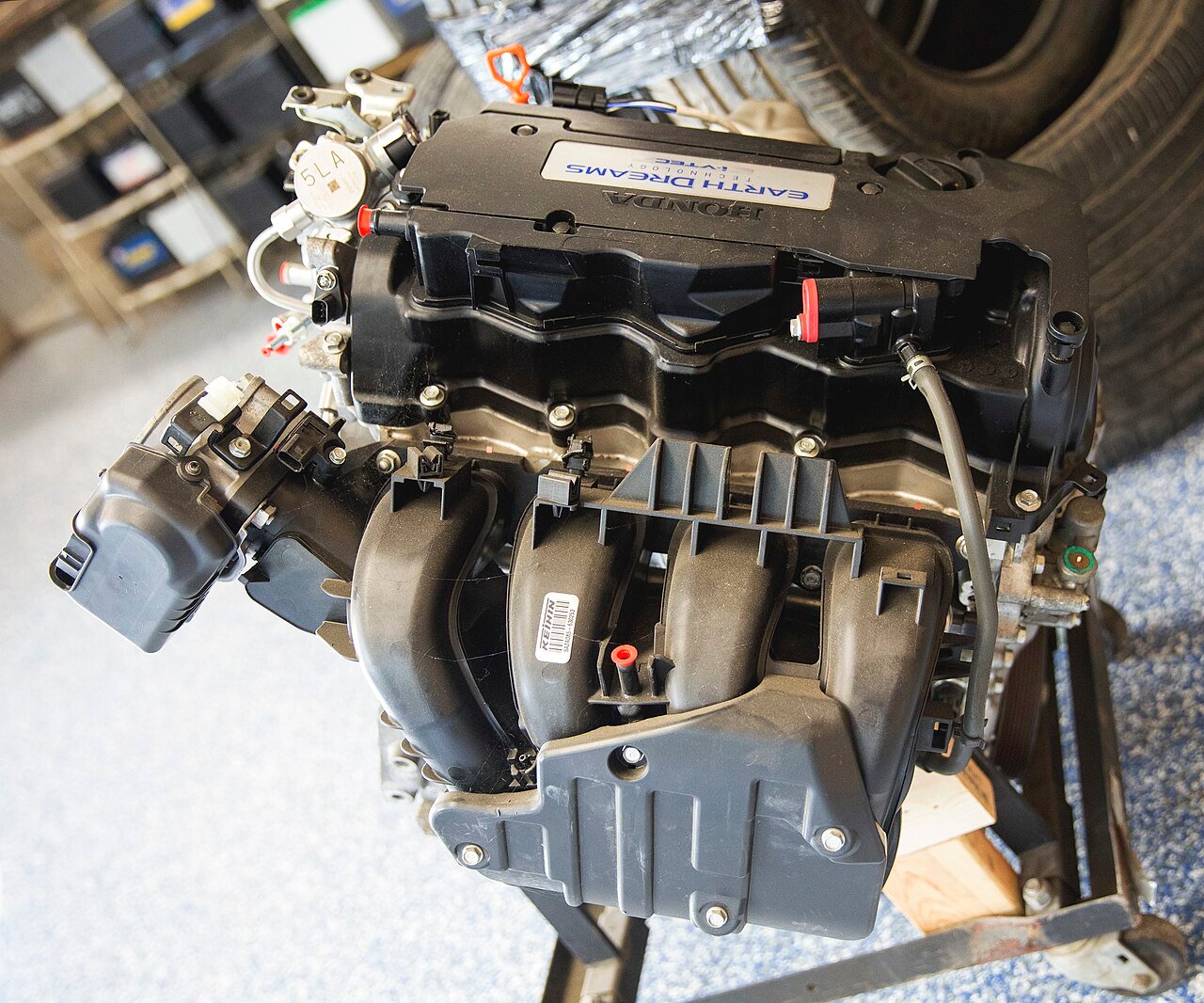
If your Accord just threw a rod, dropped compression on cylinder three, or the mechanic gave you that look after a compression test, you’re probably not shopping for a new car — you’re shopping for used engines for Honda Accord models that can get you back on the road without a car payment attached. That’s exactly what we sell, and this guide walks through what you’re actually buying, what to check, and why the Accord’s engine lineup makes this one of the easier replacement jobs in the used car world.
We’ll be straight with you: the Accord is one of the most swapped and re-engined cars in North America, mostly because Honda kept the same basic engine families in production for close to two decades. That means parts availability is good, used engine supply is good, and prices haven’t gotten crazy the way they have for some European models. Good news if you’re the one paying the bill.
Which Engine Is Actually Under Your Accord’s Hood
Before you buy anything, you need to know exactly which engine came in your car. Honda didn’t just build one Accord engine — they ran several K24 variants alongside a V6 J35 lineup for years, then switched to turbocharged four-cylinders starting with the 10th generation. Get this wrong and you’ll end up with a motor that bolts in but won’t talk to your ECU properly, or worse, one that doesn’t bolt in at all.
| Generation / Years | Engine Code | Displacement | Horsepower | Notes |
|---|---|---|---|---|
| 2003–2007 (7th gen) | K24A4 / K24A8 | 2.4L I4 | 160–166 hp | Port-injected, DOHC i-VTEC |
| 2003–2007 V6 | J35A4 | 3.5L V6 | 240 hp | SOHC VTEC |
| 2008–2012 (8th gen) | K24Z2 / K24Z3 | 2.4L I4 | 177–190 hp | 10.5:1 compression, aluminum block |
| 2008–2012 V6 | J35Z2 / J35Z3 | 3.5L V6 | 271–278 hp | VCM cylinder deactivation |
| 2013–2017 (9th gen) | K24W1 / K24W7 | 2.4L I4 | 185–189 hp | Earth Dreams, direct injection |
| 2013–2017 V6 | J35Y6 | 3.5L V6 | 278 hp | Direct injection, VCM |
| 2018–2022 (10th gen) | L15BE / L15B7 | 1.5L Turbo I4 | 192 hp | First turbo Accord engine |
| 2018–2022 (10th gen) | K20C4 | 2.0L Turbo I4 | 252 hp | 10-speed auto pairing |
Your VIN or the engine code stamped on the block will tell you exactly what you have. Don’t go by year alone — Honda overlapped some of these across trim levels, so a base LX and a Sport trim from the same model year can carry different engines entirely.
Why Accord Engines Fail in the First Place
Honda’s reputation for reliability is earned, but it’s not absolute. If you’re here, something already went wrong, and it’s worth knowing what usually causes it so you don’t repeat the problem with your replacement engine.
The 2.4L K24 family is generally solid, but the earlier K24Z units are known for oil leaks around the front crankshaft seal and a timing-chain tensioner that weakens with age, which shows up as a rattle on cold start. The Earth Dreams K24W added direct injection, and with that came carbon buildup on the intake valves — a slow killer that reduces power over 80,000-100,000 miles if nobody’s cleaning it.
The J35 V6 has its own quirk: Variable Cylinder Management. It’s a fuel-saving system that shuts down cylinders under light load, and it’s notorious for excessive oil consumption and fouled spark plugs when the VCM solenoids or rocker assemblies wear out. A lot of the used J35 engines that come through our warehouse got pulled from otherwise healthy cars because the owner didn’t want to deal with VCM problems again.
Then there’s rod knock, which doesn’t discriminate by engine family — it happens on high-mileage cars that ran low on oil at some point in their life, whether that was one bad oil change interval or years of “I’ll get to it.” Once you hear that deep knocking sound at idle, the bottom end is usually done, and a used replacement engine becomes the most economical path forward.
What “Used” Actually Means for Used Engines for Honda Accord Models
Not all used engines are created equal, and this is where a lot of buyers get burned on marketplace listings from sellers they’ve never dealt with before. A used engine that’s actually worth buying should come from a documented source — a donor vehicle with a clean title history, not a mystery pull with unknown mileage and an unknown reason for being pulled.
When we bring in used engines for Honda Accord applications, every unit gets a compression test across all cylinders before it ever gets listed. We’re checking for consistent numbers cylinder to cylinder, no more than about a 10% variance, which tells us the rings and valves are sealing properly. We also do a visual inspection for oil sludge, coolant intrusion into the oil (a sign of head gasket failure on the donor car), and physical damage to the block or heads.
Mileage matters, but it’s not the only thing that matters. A 95,000-mile K24 out of a well-maintained Accord that was traded in for a new car is usually a better buy than a 60,000-mile engine pulled from a car that was in a flood or ran hot for years. We document mileage on every listing because you deserve to know what you’re buying, not just take our word for “low miles.”
What We Check Before an Engine Leaves Our Warehouse
- Compression test on all cylinders, results documented
- Visual and borescope inspection of cylinder walls
- Oil pan drop and inspection for metal shavings
- Timing chain and tensioner condition check
- External inspection for cracks, corrosion, or prior repair welds
- Verification of engine code against the listing
- VCM/valve train inspection on V6 units
If an engine doesn’t pass, it doesn’t get listed as a running unit — it goes into the parts inventory instead. That’s a boring process to write about, but it’s the difference between a used engine that gets you another 100,000 miles and one that leaves you stranded three weeks after install.
Installation and Compatibility Notes
Swapping a K24 for a K24 across Accord generations is usually straightforward for a competent shop, though wiring harness connectors and ECU pinouts changed between the port-injected and direct-injection K24 variants, so a 2007 K24A4 won’t plug-and-play into a 2015 K24W1 harness without adapter work. If you’re moving from a 2.4L to a 3.5L V6 (or vice versa), budget for mount, wiring, and possibly transmission changes, since the K-series and J-series engines don’t share a bolt pattern with the transmission bell housing.
The turbocharged L15B and K20C4 engines in the 10th-generation Accord are a different animal entirely — direct injection, electronic wastegate control, and a CVT or 10-speed automatic that’s matched specifically to that powertrain. These aren’t easy DIY swaps between generations, but if you’re replacing a turbo Accord engine with the same code from a comparable model year, it’s a clean like-for-like job.
Always match the engine code exactly when possible, and if an exact match isn’t available, talk to us before you buy — we’ll tell you honestly whether a substitute engine is a bolt-in or a project.
Signs You Need a Replacement Engine, Not Just a Repair
Not every engine problem means you need a full replacement, and it’s worth ruling out the cheaper fixes before you commit to swapping the whole unit. A misfire from a bad ignition coil, a failed sensor throwing codes, or a leaking valve cover gasket are all repairable without touching the block. Where things change is when the damage is internal.
Rod knock is the big one — a deep, rhythmic knocking sound that gets louder under acceleration and usually means a rod bearing has worn through. There’s no repairing your way out of that without a full teardown, and by the time you’ve paid a shop for labor to open the engine, inspect it, and replace bearings, you’re often close to the cost of a tested used engine anyway. Other clear signs include a check engine light with persistent low compression codes, metal shavings in the oil pan, coolant mixing with oil (a blown head gasket that’s gone past a simple gasket replacement into warped-head territory), or an engine that simply won’t hold oil pressure no matter what you do.
If your mechanic has already told you the block or heads are damaged beyond economical repair, that’s your answer. At that point, the conversation shifts from “can we fix this” to “what’s the smartest way to replace it,” and that’s exactly where a tested used engine earns its keep.
The Cost Case for Buying Used Instead of New
A brand-new long block from Honda, plus dealer labor to install it, can run well into five figures depending on your Accord’s engine family. Even a Honda-certified remanufactured short block plus labor adds up fast once you factor in gaskets, sensors, and the shop’s hourly rate. A tested used engine sourced from a low-mileage donor car gets you the same functional result — a running, reliable powertrain — for a fraction of that cost, because you’re not paying for brand-new machining and Honda’s parts markup.
There’s also a practical angle a lot of buyers don’t think about until later: a used engine pulled from a real Accord has already proven it can run in that exact chassis, with that exact wiring and computer calibration. You’re not introducing new variables the way you might with a heavily modified or aftermarket-sourced rebuild. It’s the same engine Honda originally built for your car, just with some miles already on it — which, if it came from a well-kept donor vehicle, isn’t the downside it might sound like.
What Happens After You Place an Order
Once you’ve picked out the right engine code for your Accord, the process is pretty simple on your end. We confirm your engine code and VIN details to make sure the unit we’re pulling matches what your car actually needs, then we schedule freight. Engines ship on pallets, banded and shrink-wrapped to keep them stable in transit, with the intake and exhaust openings covered to keep debris out during shipping.
You’ll get tracking information once the engine leaves our warehouse, and for most domestic shipments you’re looking at delivery within a week, sometimes faster depending on your location. International orders take longer due to customs processing, but we handle the freight paperwork so you’re not stuck figuring out shipping documentation on your own. If anything about the engine doesn’t match what was described when it arrives, you’re covered under the warranty terms we agreed on before you paid — we’d rather make it right than have you stuck with a bad unit.
Used Accord engine pricing depends on the engine family, mileage, and how much documentation comes with it. A tested K24 typically runs less than a comparable J35 V6, mostly because the four-cylinder is more common and cheaper to source. Turbocharged units from the newer Accords tend to carry a premium since supply is still catching up with the number of these cars on the road. Whatever the number looks like, compare it against a full engine replacement at a dealership — you’ll usually find the used route saves thousands once labor is factored in on both sides, since the labor cost to install is roughly the same either way.
How Long Should a Well-Built Accord Engine Last
The Accord nameplate has been around since 1976, and its long production run (you can see the full model history on Wikipedia’s Honda Accord page) is part of why used engine supply stays healthy — there are simply a lot of these cars on the road at any given time, across a lot of different model years. Under normal maintenance, a K24 or J35 engine that gets regular oil changes and doesn’t run low on coolant will comfortably clear 200,000 miles. We’ve seen plenty go well past that. The engines that fail early are almost always victims of neglect, not bad design — skipped oil changes, ignored coolant leaks, or a timing chain service that got put off too long.
That longevity is actually good news for you as a used engine buyer. It means a lot of the Accords getting pulled apart for parts today aren’t failing because the engine gave out — they’re often totaled in accidents, written off after flood damage, or retired because the rest of the car wore out around a perfectly good motor. Fuel economy figures for your specific model year and trim are available through the EPA’s fueleconomy.gov database if you want to double check what your engine code should be delivering once it’s back in the car and running right.
Red Flags to Watch for When Shopping Elsewhere
Since you’re likely comparing options before you buy, it’s worth knowing what separates a legitimate used engine seller from someone offloading a problem. Be cautious of listings with no mileage disclosed, sellers who won’t answer basic questions about the donor vehicle, or prices that seem too low compared to everything else on the market — that gap usually means something’s being hidden. A seller who won’t guarantee compression numbers or offer any kind of warranty is asking you to take on all the risk yourself.
It’s also worth asking directly whether the engine was run and tested after removal, or just pulled and shelved. An engine that sat disconnected for months without being turned over can develop rust on cylinder walls or seized components, especially if it wasn’t stored properly. These are the kinds of questions a legitimate seller answers without hesitation, because the testing already happened before the listing went live.
Where to Buy Used Engines for Honda Accord Models
Our Honda inventory changes as engines come in and get tested, so it’s worth checking current stock rather than assuming what was available last month is still on the shelf. Right now we have the Honda R20A engine tested and ready to ship, and we regularly bring in additional K24 and J35 units as donor vehicles come through. If you don’t see your exact engine code listed, reach out — we source engines from multiple yards and can often locate what you need within a few days.
We also carry engines for other daily drivers if you’re helping a friend or family member sort out their own car — take a look at our full used engine inventory while you’re at it, since we’re adding new arrivals every week across most major makes.
Frequently Asked Questions
How many miles should a used Honda Accord engine have on it?
There’s no hard cutoff, but we generally recommend staying under 120,000 miles unless the engine has strong documentation and passed a thorough compression test. What matters more than the odometer number is maintenance history and how the engine tested when it came in.
Will a used engine come with a warranty?
Yes. Every engine we sell is tested before listing and backed by a warranty period so you’re not taking on someone else’s risk. Ask about specific terms for the engine code you’re looking at, since coverage can vary by engine family and mileage.
Can I put a V6 J35 engine into an Accord that came with a K24?
It’s possible but not simple. You’re looking at different engine mounts, a different transmission bell housing pattern, and a wiring harness that wasn’t designed for your car. Most owners in this situation are better off sourcing the same engine family that originally came in the car unless they’re planning a dedicated swap project.
What’s the difference between a used engine and a remanufactured one?
A used engine is pulled from a donor vehicle and tested as-is. A remanufactured engine has had wear components replaced — rings, bearings, gaskets — before it’s sold. Remanufactured units cost more but come with fresher internals. We’re upfront about which category each listing falls into.
Do you ship Honda Accord engines internationally?
Yes, we ship worldwide. Freight cost and delivery time depend on your location, so reach out with your destination and we’ll get you an accurate quote before you commit to anything.
Do I need to replace the transmission along with the engine?
Not necessarily. If your existing transmission is healthy and matches the engine family you’re installing, most shops will reuse it. It’s worth having your transmission inspected at the same time you’re doing engine work, though, since it’s much cheaper to address issues while everything is already apart.
How do I know if my Accord’s engine problem is covered by a recall instead?
Honda has issued recalls on certain Accord model years for specific issues, so it’s worth checking your VIN against Honda’s recall database before you spend money on a replacement engine. If your specific failure isn’t recall-related, though, a tested used engine remains the most practical path forward.
If you’re ready to move forward, check our current stock of used engines for Honda Accord models, or contact us directly with your engine code and we’ll tell you what we have on hand or how quickly we can source it.
Posts Widget




Best Auto Motors
USA HERALD MAGAZINE INC
Buy the best quality engines from our website online and get a fast delivery within 6 days.
Copyright 2022.KlbTheme . All rights reserved
