


Used Engines for Ford F150: Coyote vs EcoBoost Buying Guide
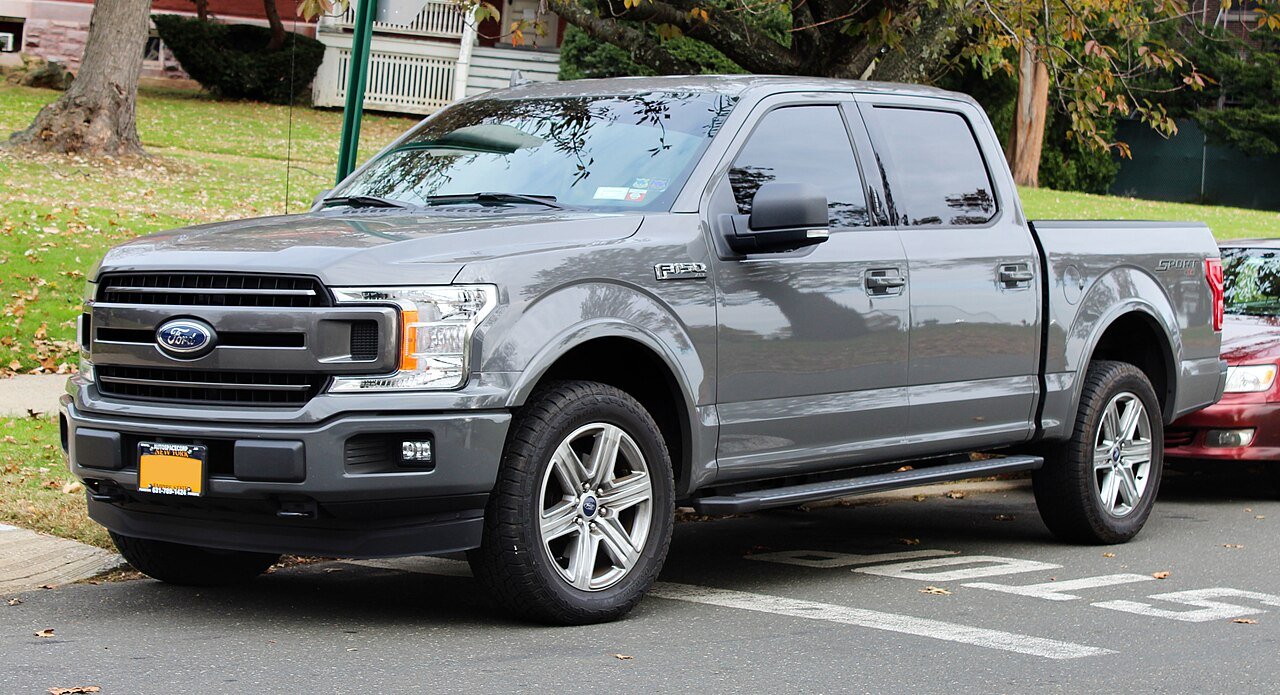
When a Coyote V8 throws a rod or an EcoBoost’s turbo finally gives up after 150,000 miles of towing, most F150 owners aren’t looking to trade the truck in — they’re looking for used engines for Ford F150 trucks that can get them hauling again without the dealership price tag. That’s what we do here, and this article covers the engine lineup, what typically fails and why, and how to buy a used F150 engine without getting burned.
The F150 has been America’s best-selling truck for decades, which works in your favor as a buyer. There are a lot of these trucks on the road, which means a steady supply of donor engines coming through salvage yards and dealer trade-ins, and that keeps used engine prices reasonable compared to trucks with smaller production numbers.
Which Engine Is In Your F150
Ford has offered more engine variety in the F150 than almost any other truck on the market, and getting the engine code right matters more here than with most vehicles, since a 2.7L EcoBoost and a 5.0L Coyote don’t share much beyond a bell housing bolt pattern. This is exactly why shoppers looking for used engines for Ford F150 trucks need to nail down the code before calling around.
| Engine | Years Common | Type | Horsepower | Torque |
|---|---|---|---|---|
| 2.7L EcoBoost V6 | 2015–present | Twin-turbo V6 | 325–335 hp | 400 lb-ft |
| 3.3L Ti-VCT V6 | 2018–present | N/A V6 (base) | 290 hp | 265 lb-ft |
| 3.5L EcoBoost V6 | 2011–present | Twin-turbo V6 | 375–400 hp | 470–500 lb-ft |
| 3.5L High-Output EcoBoost | 2017–present (Raptor) | Twin-turbo V6 | 450 hp | 510 lb-ft |
| 5.0L Coyote V8 | 2011–present | N/A V8 | 360–400 hp | 380–410 lb-ft |
| 3.5L PowerBoost Hybrid | 2021–present | Twin-turbo V6 + electric | 430 hp | 570 lb-ft |
| 5.2L Supercharged V8 | 2022–present (Raptor R) | Supercharged V8 | 700–720 hp | 640 lb-ft |
Note that the 5.0L Coyote itself went through three generations with meaningful internal changes, so a Gen 1 (2011-2014) unit isn’t a straight power-for-power match with a Gen 3 (2018+) block even though both are labeled “5.0.” Check the casting numbers and confirm the model year range before buying if you want an exact match.
Why F150 Engines Actually Fail
The 3.5L EcoBoost, particularly the first-generation units from 2011-2016, has a well-documented cam phaser failure pattern that shows up as a rattly cold start and, if ignored, can lead to timing chain stretch and real internal damage. There’s also an intercooler condensation issue on early EcoBoost trucks where cold, humid air causes water to pool in the intercooler and get ingested into the cylinders under hard acceleration, which can cause a rough stumble and, in bad cases, engine damage.
The 2.7L EcoBoost has had its own reports of cam phaser rattle, especially on trucks built before the redesigned Gen 3 phaser rolled out around 2021. It’s a smaller-displacement engine so the failure isn’t identical to the 3.5, but the underlying wear pattern is similar.
The 5.0L Coyote V8 has the best long-term reputation of the bunch. It doesn’t share the EcoBoost’s cam phaser problems, and it’s commonly reported to reach 250,000 to 300,000 miles with normal maintenance. When Coyote engines do fail, it’s usually from the same causes that kill any engine — running low on oil, overheating, or simple high-mileage wear on rod bearings.
Across the board, rod knock from oil neglect is the single biggest reason F150 engines end up needing full replacement rather than a repair. Trucks work hard, get towed hard, and sometimes get maintenance skipped when a work schedule gets busy. That’s not a knock on Ford’s engineering — it’s just what happens to hard-working trucks over time.
What Makes Used Engines for Ford F150 Trucks Worth Buying
A used F150 engine is only as good as the testing behind it. Every engine we bring in gets a compression test across all cylinders, and we’re looking for consistency — a cylinder reading meaningfully lower than the rest usually points to a valve or ring problem that didn’t show up on a casual inspection. We also drop the oil pan to check for metal in the sludge, which is one of the clearest signs of internal wear that a visual inspection from outside the engine will never catch.
For EcoBoost engines specifically, we check cam phaser play and listen for the characteristic rattle on cold start before an engine ever gets listed. If a phaser is showing wear, that engine either gets the phasers replaced before sale or gets flagged clearly in the listing — we don’t sell a rattling EcoBoost as if it’s problem-free, because you’d find out within a week of installing it.
What We Check Before an F150 Engine Ships
- Compression test across all cylinders, documented
- Cold-start cam phaser inspection on EcoBoost units
- Oil pan inspection for metal contamination
- Turbocharger shaft play check on EcoBoost engines
- Visual inspection for cracks, corrosion, or leaks
- Engine code verification against listing description
- Intercooler and intake inspection for water damage history
Any engine that doesn’t clear these checks doesn’t go up as a running unit. It gets parted out instead, which protects you from ending up with a truck engine that looks fine on paper but has problems hiding underneath.
EcoBoost vs. Coyote: Which Should You Replace With
If your truck came with a 3.5L EcoBoost and it failed, you don’t necessarily have to replace it with another EcoBoost. Some owners in this situation switch to a 5.0L Coyote for the simpler, non-turbo reliability, though this isn’t a plug-and-play swap — it requires different engine mounts, wiring, and in some cases a different transmission calibration since the EcoBoost and Coyote were tuned for different power delivery.
For most owners, the simpler and more cost-effective path is replacing like with like — same engine family, same displacement, matched to your model year. It keeps your existing wiring harness, transmission calibration, and emissions equipment all correctly matched, which means less labor and fewer surprises during install.
Signs You Need a Replacement Engine, Not a Repair
Not every issue under the hood means the whole engine needs to come out. A stumbling idle from a bad ignition coil, a failed cam phaser solenoid, or a leaking valve cover gasket are all fixable without touching the block internals. Where it shifts to replacement territory is when the damage is internal — rod knock, a spun bearing, or a cracked block from overheating.
Rod knock is the clearest signal. It’s a deep, rhythmic knocking that gets more noticeable under load or acceleration, and it means a rod bearing has worn through enough that there’s metal-on-metal contact happening inside the engine. There’s no repairing around that without a full teardown, and once you’ve paid a shop for labor to open the engine up, inspect the damage, and source internal parts, you’re often close to the cost of a tested used engine anyway. Other signs it’s time for a replacement include a check engine light with persistent misfire or low-compression codes across multiple cylinders, visible metal shavings in the oil, coolant mixing into the oil from a blown head gasket that’s gone past a simple gasket fix, or an engine that won’t hold oil pressure no matter what gets adjusted.
If a mechanic has already told you the block is cracked or the internals are shot, that’s your answer. From there it’s a question of the smartest path to getting your truck running again, and for most F150 owners that path is a tested used engine rather than a full rebuild or a brand-new long block from the dealer.
The Cost Case for Buying Used
A new long block from Ford, installed by a dealer, can run into five figures depending on which engine your F150 takes — and that’s before you factor in the labor rate most dealerships charge for a job that can take a full day or more. Even a certified remanufactured engine plus installation adds up fast once gaskets, sensors, and fluids are included. A tested used engine pulled from a comparable donor truck gets you back to a running, reliable powertrain for a fraction of that cost, since you’re not paying for new-manufacture machining or Ford’s parts markup on OEM components.
There’s also a practical benefit that’s easy to overlook: a used engine pulled from an actual F150 has already proven it runs correctly in that chassis, with that wiring harness and that computer calibration. You’re not introducing unknowns the way you might with an aftermarket rebuild kit or a mixed-parts build. It’s the same engine Ford originally built for your truck, just with some miles on it already — and if it came from a well-maintained donor, that’s a lot less risky than it sounds.
What Happens After You Place an Order
Once you’ve identified the right engine for your F150, the process on your end is simple. We confirm the engine code and your truck’s VIN details to make sure the unit matches what you actually need, then we schedule freight. Engines ship on pallets, secured and shrink-wrapped for transit, with intake and exhaust openings covered to keep debris and moisture out during shipping.
You’ll get tracking information as soon as the engine leaves our warehouse. Most domestic deliveries arrive within a week, sometimes faster depending on your location, while international orders take a bit longer due to customs processing — though we handle the freight paperwork so you’re not left figuring out documentation on your own. If anything about the engine doesn’t match what was described on arrival, you’re covered under the warranty terms agreed on before purchase.
Pricing on used F150 engines varies by displacement, condition, and mileage, but as a general pattern the 2.7L EcoBoost tends to run less than the 3.5L EcoBoost, and the 5.0L Coyote sits in a similar range to the 3.5L depending on model year and mileage. High-output and hybrid variants carry a premium since fewer of them exist in the used market relative to demand. Whatever the specific number, it’s worth comparing against a full engine replacement through a dealer, where labor and parts markup on a new long block can easily run several times what a tested used engine costs.
Where to Buy Used Engines for Ford F150 Trucks
We keep F150 engines in rotation as trucks come through, and right now we have the 2.7L V6 Twin Turbo engine pulled from an 18-19 model year F150, tested and ready to ship, along with a 2015-2017 5.0L Coyote engine with 79K miles, complete and OEM. Both have been through our full inspection process before listing.
If you need a different engine code or displacement, get in touch — we regularly source additional F150 engines and can usually track one down within a few days even if it’s not currently on the shelf. You can also browse our complete used engine inventory for other trucks and cars if you’re helping out a friend or shopping for a second vehicle.
How Long Should a Well-Maintained F150 Engine Last
The F150 nameplate goes back to 1975 as part of Ford’s long-running F-Series lineup (you can read the full production history on Wikipedia’s Ford F-150 page), and that decades-long run is part of why used engine supply stays consistent — there are simply millions of these trucks in circulation across model years. A well-maintained 5.0L Coyote will often clear 250,000 miles without major work. EcoBoost engines can get there too, but they’re more dependent on staying ahead of cam phaser wear and keeping the intercooler system clean. Current EPA fuel economy figures by engine and model year, if you want to double-check what your specific configuration should be getting, are available through fueleconomy.gov.
Red Flags When Shopping Used Engines Elsewhere
Since a truck engine is a bigger investment than most parts on your F150, it’s worth being careful about where you buy. Be wary of listings with no disclosed mileage, sellers who can’t tell you anything about the donor truck, or prices well below the going rate — that gap is rarely a coincidence. A seller unwilling to guarantee compression numbers or provide any warranty is putting all the risk on you. Ask directly whether the engine was started and run after removal, since an engine that sat for months without being turned over can develop cylinder wall rust or seized components that a quick visual check won’t reveal.
Towing and Work Truck Considerations
If your F150 spends its life towing a trailer or hauling equipment, it’s worth thinking about which engine makes sense for a replacement rather than just matching the original code by default. The 3.5L EcoBoost was built specifically for towing capability and pulls strong at low RPM thanks to the turbochargers, which is why it remains Ford’s top choice for max towing numbers. The 5.0L Coyote gives up a little peak torque but makes up for it with mechanical simplicity — fewer components that can fail under sustained heavy load, no turbos to manage heat around, and a long track record in fleet and work-truck applications.
For owners replacing an engine on a truck that sees regular heavy-duty use, this is a reasonable moment to reconsider engine choice rather than assuming you have to replace with the exact same code. Just remember that changing displacement or engine family means changing mounts, wiring, and possibly transmission calibration, so factor that into your total cost and labor time before deciding.
Frequently Asked Questions
How many miles is too many for a used F150 engine?
There’s no fixed cutoff, but we generally suggest staying under 120,000 miles unless the engine has strong maintenance documentation and passed a full compression test. Maintenance history matters more than the odometer number alone.
Do used F150 engines come with a warranty?
Yes. Every engine we sell has been tested and is backed by a warranty period. Coverage terms can vary by engine family and mileage, so ask about specifics for the engine you’re considering.
Can I swap a 2.7L EcoBoost for a 3.5L EcoBoost?
It’s possible, but it’s not a simple bolt-in job. You’ll need to account for different turbo sizing, cooling requirements, and likely a transmission tune update, since the two engines were calibrated for different power outputs. Most owners find it more economical to replace with the same displacement they started with.
Is a used engine better than a remanufactured one?
They serve different budgets and needs. A used engine is tested as pulled from the donor vehicle. A remanufactured engine has worn components replaced — bearings, rings, gaskets — before sale, which costs more but gives you fresher internals. We’re upfront about which category each listing falls under so you can decide what fits your budget.
Do you ship F150 engines internationally?
Yes, we ship worldwide. Shipping cost and delivery time depend on your destination, so reach out with your location and we’ll get you an accurate freight quote before you commit.
What’s included with a used F150 engine purchase?
Listings vary, so check the specific product description for what’s included — some come as complete long blocks with accessories, others as bare long blocks. We list exactly what’s included so there’s no guesswork when the engine arrives.
Will a used engine trigger a check engine light after install?
It shouldn’t, assuming the engine is correctly matched to your truck’s model year and the install is done properly, including reconnecting all sensors and updating any adaptive learning the ECU needs. If a light does come on after install, it’s usually a sensor connection issue rather than a problem with the engine itself, and most shops can diagnose it quickly.
How do I know if my F150’s problem is covered under a Ford recall instead?
Ford has issued recalls covering specific F150 model years and components, so it’s worth checking your VIN against Ford’s recall lookup before spending money on a replacement engine. If your issue isn’t recall-related, a tested used engine remains the most practical and affordable path forward.
If you’re ready to move forward, take a look at our current stock of used engines for Ford F150 trucks, or reach out directly with your engine code and we’ll confirm what we have on hand or how fast we can source it.
Posts Widget




Best Auto Motors
USA HERALD MAGAZINE INC
Buy the best quality engines from our website online and get a fast delivery within 6 days.
Copyright 2022.KlbTheme . All rights reserved
