


Used Engines for Nissan Altima: QR25DE, VQ35DE, KR20DDET Guide
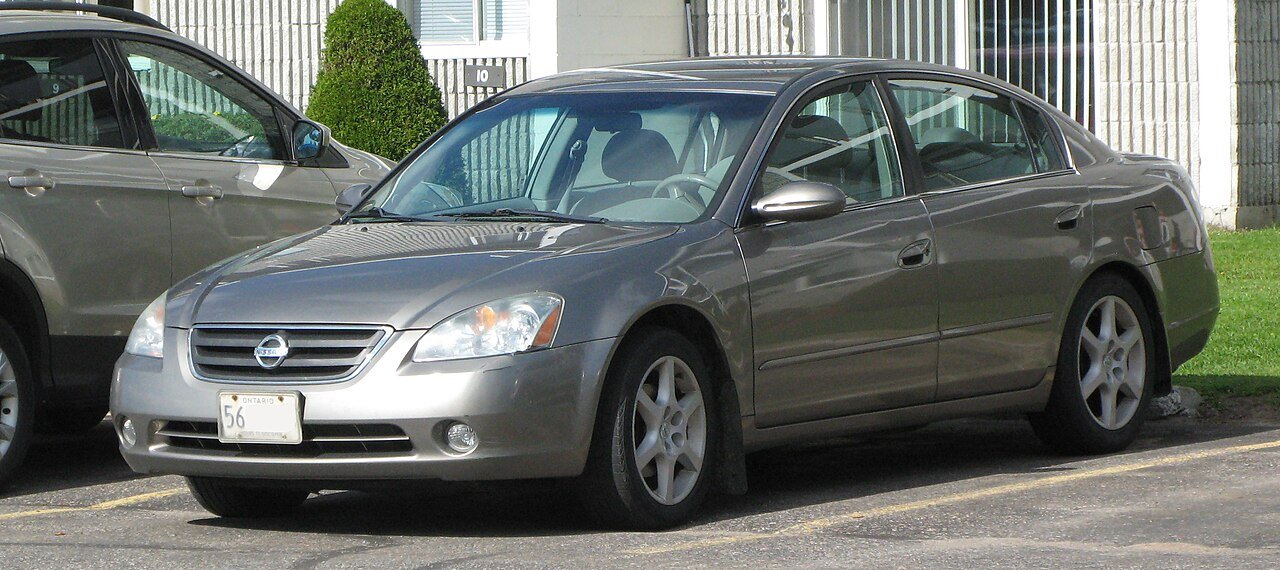
A CVT that’s about to take the QR25DE down with it, or a KR20DDET that’s lost compression after a boost leak went unnoticed too long — either way, you’re probably here because you’re looking for used engines for Nissan Altima models that get the car running again without dealer pricing attached. This guide covers the Altima’s engine lineup across generations, what typically fails and why, and how to buy a used engine without taking on someone else’s problem.
The Altima has been one of Nissan’s highest-volume sedans for over two decades, which is good news if you’re shopping used engines — there’s a steady, reliable supply of donor cars coming through salvage yards and trade-ins, keeping prices reasonable compared to lower-volume models.
Which Engine Is In Your Altima
Nissan kept the Altima’s engine lineup relatively simple for most of its run, centered around the QR25DE four-cylinder, with a V6 option available on earlier generations and a turbocharged variable-compression engine introduced more recently. Getting the exact code right still matters, since the QR25DE went through meaningful revisions over its production life.
| Generation / Years | Engine Code | Displacement | Horsepower | Notes |
|---|---|---|---|---|
| 2002–2006 (2nd gen) | QR25DE | 2.5L I4 | 175 hp | Original QR25, cast steel rods |
| 2002–2006 (2nd gen) | VQ35DE | 3.5L V6 | 240–255 hp | 6-speed manual available |
| 2007–2012 (3rd gen) | QR25DE (revised) | 2.5L I4 | 175 hp | Updated internals |
| 2007–2012 (3rd gen) | VQ35DE | 3.5L V6 | 270 hp | CVT-only pairing |
| 2013–2018 (5th gen) | QR25DE | 2.5L I4 | 179–182 hp | CVT, no V6 offered |
| 2019–present (6th gen) | PR25DD | 2.5L I4 | 188 hp | Direct injection replaces QR25DE |
| 2019–present (6th gen) | KR20DDET | 2.0L Turbo I4 | 248 hp | Variable Compression VC-Turbo |
Confirm your engine code against the build tag or VIN before ordering, especially if you’re shopping for a 2019 or newer Altima — the PR25DD looks similar to the older QR25DE on paper but is a meaningfully different design with direct injection, and it’s not interchangeable with the older engine’s wiring and fuel system.
Why Altima Engines Actually Fail
The QR25DE has a long track record and is generally a reliable engine, but it does have a tendency toward increased oil consumption as it ages, more so than its smaller QR20 sibling. Left unmonitored, running low on oil is what eventually leads to bearing wear and, in the worst cases, rod knock. It’s a straightforward engine mechanically, which works in your favor if you catch problems early — there’s just not a lot of complexity to go wrong compared to some of the turbocharged competition.
The VQ35DE V6, when it was offered, is a strong and reasonably reliable engine, though high-mileage units can develop oil leaks around valve cover gaskets and the timing chain guides can wear with age. It’s less common on the used market simply because Nissan phased it out of the Altima lineup after the third generation in favor of the CVT-only four-cylinder setup.
The newer KR20DDET VC-Turbo engine is a more complex design with a variable compression ratio system that adjusts on the fly for efficiency and power. It’s an impressive piece of engineering, but that complexity means more potential failure points than the old QR25DE, including turbo-related issues and sensor problems tied to the compression ratio actuator. Since this engine has been in production for a shorter time, long-term reliability data is still developing, but early reports suggest it’s holding up reasonably well when maintained on schedule.
Across the whole lineup, the CVT transmission tends to get more attention for reliability concerns than the engines themselves, but a failing CVT can sometimes get blamed for what’s actually an engine-side problem, so it’s worth having both properly diagnosed before assuming which one needs replacement.
What Makes Used Engines for Nissan Altima Models Worth Buying
Every Altima engine we bring in gets a compression test across all cylinders before it’s listed, checking for consistency that indicates healthy rings and valves. On QR25DE units specifically, we check oil consumption history where documentation allows and inspect for the sludge buildup that can happen when oil changes were stretched too long. On the turbocharged KR20DDET, we check turbo shaft play and boost system integrity in addition to the standard compression testing.
Mileage matters, but maintenance history matters more. A 100,000-mile QR25DE from a well-documented donor car with consistent oil changes is a safer bet than a lower-mileage engine with no service records, since oil consumption problems on this engine family are directly tied to how well it was maintained rather than just how many miles it’s covered.
What We Check Before an Altima Engine Ships
- Compression test across all cylinders, documented
- Oil consumption and sludge inspection on QR25DE/PR25DD units
- Turbocharger shaft play check on KR20DDET engines
- Timing chain guide condition on VQ35DE V6 units
- Visual inspection for cracks, corrosion, or leaks
- Engine code verification against listing and VIN data
- Valve cover and oil pan gasket condition check
Engines that don’t pass these checks don’t go up as running units — they get parted out instead. It’s a simple process, but it’s the difference between a used engine that gets you another 100,000 miles and one that leaves you dealing with the same problem again in a few months.
Installation Notes and Compatibility
Replacing a QR25DE with another QR25DE from a comparable model year is generally straightforward for a competent shop, though the engine did receive internal revisions over its production run, so matching the specific sub-variant to your model year avoids unnecessary compatibility headaches. If you’re moving from a QR25DE to the newer PR25DD, be aware this isn’t a simple swap — the wiring harness, fuel delivery system, and ECU calibration are different enough that it becomes a real project rather than a like-for-like replacement.
Swapping a four-cylinder QR25DE for a V6 VQ35DE (or vice versa) requires different engine mounts and, in older generations, a different transmission, since the two engines weren’t always paired with the same gearbox across every model year. It’s a bigger job than it might look on paper, so plan accordingly if you’re going this route.
The Cost Case for Buying Used Instead of New
A new long block from Nissan, plus dealer labor to install it, adds up fast, and even a certified remanufactured short block plus labor for gaskets, sensors, and fluids can run well past what a lot of Altima owners are willing to put into a car at this point in its life. A tested used engine sourced from a comparable donor car gets you the same functional outcome — a running, reliable Altima — for a fraction of that cost, since you’re not paying for brand-new machining or dealer parts markup.
There’s also a practical angle worth mentioning: a used engine pulled from an actual Altima has already proven it runs correctly with that specific wiring and ECU calibration. You’re not introducing new variables the way you might with a mixed-parts rebuild. It’s the same engine Nissan originally built for your car, just with some miles already on it — and if it came from a well-kept donor vehicle, that’s a lot less risky than it might sound.
What Happens After You Place an Order
Once you’ve identified the right engine code for your Altima, the process on your end is simple. We confirm the engine code and your VIN details to make sure the unit we’re pulling matches what your car actually needs, then we schedule freight. Engines ship on pallets, banded and shrink-wrapped to keep them stable in transit, with intake and exhaust openings covered to keep debris out during shipping.
You’ll get tracking information once the engine leaves our warehouse. Most domestic shipments arrive within a week, sometimes faster depending on your location, while international orders take a bit longer due to customs processing — though we handle the freight paperwork so you’re not left figuring out documentation on your own. If anything about the engine doesn’t match what was described when it arrives, you’re covered under the warranty terms agreed on before you paid.
What You Should Expect to Pay
Used Altima engine pricing tends to be some of the more approachable in the used market, largely because the Altima’s production volume keeps donor supply healthy. The QR25DE is typically the most affordable and most available option. The VQ35DE V6 carries a modest premium given its lower supply on the used market. The newer KR20DDET turbo engine, being both more complex and less common on the used market so far, tends to command the highest price of the group. Whatever the number, it’s worth comparing against a dealer quote for a factory replacement, where labor and parts markup typically make the used route meaningfully cheaper.
Where to Buy Used Engines for Nissan Altima Models
Our Nissan inventory includes several strong options if you’re shopping for an Altima-compatible engine, including the Nissan VQ37VHR engine and the Nissan VK56VD engine, both tested and ready to ship if you’re working on a related Nissan platform or considering a performance-oriented swap. We regularly bring in additional QR25DE and VQ35DE units as donor vehicles come through, so if your exact engine code isn’t currently listed, reach out and we’ll confirm what’s available or how quickly we can source it.
You can also browse our complete used engine inventory for other makes and models while you’re comparing your options.
How Long Should a Well-Maintained Altima Engine Last
The Altima has been in continuous production since 1992 (the full model history is documented on Wikipedia’s Nissan Altima page), and that long run means a steady, reliable flow of donor vehicles across every generation. A well-maintained QR25DE will often clear 200,000 miles with basic maintenance, provided oil consumption is monitored and topped off between changes as needed. The VQ35DE V6 has a similarly strong reputation for longevity when maintained on schedule. If you want to verify what fuel economy your specific engine and model year should be delivering once it’s back in the car, current figures are available through fueleconomy.gov.
Red Flags When Shopping Used Engines Elsewhere
Since the Altima is a high-volume car, it also attracts a lot of low-effort listings from sellers who haven’t tested what they’re selling. Be cautious of listings with no mileage disclosed, sellers who can’t answer basic questions about the donor vehicle’s maintenance history, or prices that seem unusually low compared to everything else on the market — that gap is rarely a coincidence. Ask directly whether the engine was started and run after removal, since an engine that sat disconnected for months can develop cylinder wall rust or seized components that a quick visual inspection won’t catch.
Signs You Need a Replacement Engine, Not a Repair
Not every Altima engine problem calls for a full replacement. A misfire from a bad ignition coil, a leaking valve cover gasket, or a failed oxygen sensor are all repairable without touching the internals. Where it shifts to replacement territory is internal damage — rod knock, a spun bearing, or a head gasket failure that’s progressed to warped heads.
Rod knock is the clearest signal, and on the QR25DE it’s almost always tied to extended oil consumption that went unmonitored. If you’re hearing a deep knocking sound that gets louder under acceleration, or a mechanic has already found metal in the oil pan, you’re looking at replacement territory rather than a simple repair. Other signs include persistent low-compression codes across multiple cylinders, coolant mixing with oil, or an engine that won’t hold oil pressure regardless of what gets adjusted.
Choosing the Right Replacement for How You Actually Drive
If you’re replacing a QR25DE and have the option to consider a different engine family, it’s worth thinking about how you actually use the car rather than just matching the original code by default. The QR25DE remains the simplest and most affordable option, and its mechanical simplicity is a real advantage if you want a car that’s easy and cheap to keep running for years to come. The VQ35DE V6, where available, offers noticeably stronger acceleration and a smoother highway feel, at the cost of slightly worse fuel economy and a smaller pool of used engines to choose from.
The KR20DDET turbo engine offers a meaningful step up in both power and efficiency over the older four-cylinder, but it’s a newer, more complex design, and used supply is still limited compared to the QR25DE. For most owners doing a straightforward replacement on a daily driver, sticking with the same engine family that came in the car is the simplest and most cost-effective path, since it avoids the wiring, mount, and transmission compatibility questions that come with crossing engine families.
Frequently Asked Questions
How many miles should a used Altima engine have?
There’s no fixed cutoff, but we generally recommend staying under 130,000 miles unless the engine has strong documented maintenance history and passed a thorough compression test. For the QR25DE specifically, documented oil consumption monitoring matters as much as the odometer reading.
Do used Altima engines come with a warranty?
Yes. Every engine we sell has been tested and is backed by a warranty period. Coverage terms can vary by engine family and mileage, so ask about specifics for the engine you’re considering.
Can I put a V6 VQ35DE into an Altima that came with a QR25DE?
It’s possible on generations where Nissan offered both engines, but you’ll need matching engine mounts and, depending on model year, a compatible transmission, since the pairings weren’t universal across every trim. Most owners find it simpler to replace with the same engine family the car originally came with.
What’s the difference between a used engine and a remanufactured one?
A used engine is pulled from a donor vehicle and tested as-is. A remanufactured engine has had wear components replaced — rings, bearings, gaskets — before it’s sold, which costs more but comes with fresher internals. We’re upfront about which category each listing falls into.
Do you ship Nissan Altima engines internationally?
Yes, we ship worldwide. Freight cost and delivery time depend on your location, so reach out with your destination and we’ll provide an accurate quote before you commit.
Is the CVT transmission likely to fail along with the engine?
Not necessarily, but Altima CVTs have their own documented reliability concerns separate from the engine. It’s worth having the transmission inspected at the same time as engine work, since it’s more cost-effective to address both while everything is already apart than to discover a transmission problem after the engine swap is complete.
How do I know if my Altima’s engine problem is covered under a Nissan recall instead?
Nissan has issued recalls covering specific components on certain Altima model years, so it’s worth checking your VIN against Nissan’s recall database before spending money on a replacement engine. If your issue isn’t recall-related, a tested used engine remains the most practical path forward.
If you’re ready to move forward, take a look at our current stock of used engines for Nissan Altima models, or reach out directly with your engine code and we’ll confirm what we have on hand or how quickly we can source it.
Posts Widget




Best Auto Motors
USA HERALD MAGAZINE INC
Buy the best quality engines from our website online and get a fast delivery within 6 days.
Copyright 2022.KlbTheme . All rights reserved
