


BMW S65B44 Engine Price: What This M3 V8 Actually Costs
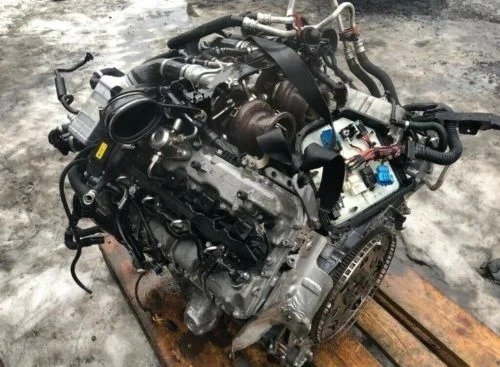
If you’ve been pricing out a BMW S65B44 engine, you’ve probably noticed there isn’t a lot of clean, straight-talking information out there — just forum threads from a decade ago and a handful of listings with no real detail. So let’s just talk about it plainly: what a BMW S65B44 engine price actually looks like on the used and rebuilt market, why it costs what it does, and where our own in-stock unit — priced at $3,400 — sits against everything else out there. We sell engines for a living, this one included, so this isn’t a generic spec dump. It’s what we tell customers on the phone.
What Is the BMW S65B44, Really?
The S65 is BMW M’s naturally aspirated V8, built for the E90/E92/E93-generation M3. Most people who’ve owned or wrenched on an M3 from that era know the standard version, the S65B40 — 4.0 liters, revving to 8,400 rpm, one of the last great screamers before turbocharging took over the M lineup. The B44 is the bigger, rarer sibling. BMW bored and stroked it out to 4,361 cc and dropped it into two low-volume special models: the M3 GTS in 2010 and the M3 CRT that followed in 2011 and 2012. Neither car was sold in huge numbers — the GTS was capped at 150 units worldwide, and the CRT wasn’t much bigger of a run. That scarcity is baked directly into the S65B44 engine price the moment you start shopping for one.
Because so few of these cars exist, complete B44 engines almost never show up loose. What you usually find is either a car being parted out after an accident, a track car that got retired, or — like ours — a unit that’s already been pulled, tested, and put into inventory ready to ship. If someone’s advertising a “S65B44 for sale” and it isn’t attached to a wrecked GTS or CRT, ask where it came from. That question matters more with this engine than almost any other used V8 we handle.
The GTS itself is worth understanding a bit, because it explains why people chase this specific engine instead of just buying a regular S65-powered M3 and calling it a day. BMW built the GTS as a stripped-down, track-focused homologation-adjacent special — roll cage delete option, fixed-back seats, a big rear wing, and this larger-displacement V8 as the headline mechanical change. The CRT that followed a year later took a slightly different angle, more of a lightweight sedan built in even smaller numbers, but under the hood it’s the same B44. Enthusiasts who know the platform treat the B44 almost like a factory stroker kit BMW never sold separately — you can’t just order the parts and build one at home, because BMW never released the internals or the specific ECU calibration as a retail option.
That’s the whole reason a loose B44 commands real money on its own, independent of whatever car it might end up in.
Worth saying plainly: this isn’t a “tune your B40 and call it a B44” situation. The stroke difference is a physical, machined change to the crankshaft and connecting rods, not a software update. People occasionally ask if there’s a way to fake the difference with a chip — there isn’t, not without literally swapping in the longer-stroke internals, which is effectively building a B44 from a B40 anyway, at which point you’ve spent more than just buying the real thing.
The Numbers That Actually Matter
Specs alone don’t tell you much until you’ve felt what this engine does at 7,000 rpm, but they’re worth laying out plainly, because they explain a lot of the price of a BMW S65B44 compared to lesser engines that look similar on paper.
| Spec | Detail |
|---|---|
| Displacement | 4,361 cc (4.4L) |
| Configuration | 90° V8, naturally aspirated, DOHC, 32 valves |
| Bore x Stroke | 92mm x 82mm |
| Power | ~331 kW / ~450 PS at ~8,300 rpm |
| Torque | ~440 Nm at ~3,750 rpm |
| Redline | ~8,300 rpm |
| Block/Heads | Aluminum alloy |
That’s roughly 20 more horsepower and a noticeably fatter torque curve than the standard S65B40, from an engine that still spins to 8,300 rpm and still uses individual throttle bodies per cylinder — eight separate butterflies, one per cylinder, which is a huge part of why this thing responds like a switch instead of a dial. BMW’s VANOS variable valve timing system manages both intake and exhaust cams, and it’s tuned specifically for the B44’s longer stroke, so it isn’t a straight bolt-in match with B40 VANOS components even though the two engines look nearly identical from across the shop.
Bore stayed the same as the B40 at 92mm; BMW got the extra displacement almost entirely out of a longer 82mm stroke. That’s part of why the B44 makes noticeably more torque lower in the rev range even though peak power still arrives near redline — it’s not just a bigger-numbers version of the same engine, the whole character shifts slightly toward usability without giving up any of the top-end drama.
So What Is the BMW S65B44 Engine Price, Actually?
Here’s the honest range, based on what we’ve seen move and what we’ve paid to source cores ourselves: complete used S65B44 units, when they surface at all, tend to land somewhere between $2,800 on the low end for a bare, untested pull with no accessories, up toward $6,000-$7,000 for a fully verified, low-mileage unit with GTS-specific intake, ECU, and wiring harness included and clean provenance paperwork. Rebuilt units with fresh bearings and a documented rebuild invoice can run higher than that, sometimes north of $8,000, because a shop is charging for labor and machine work on top of the core.
Our current unit is priced at $3,400, which puts it solidly in the lower-middle of that range — not a stripped bare-block special, but not inflated GTS-badge pricing either. It’s tested, it’s here, and it ships. For an engine this scarce, that’s a fair number, and it’s why this particular listing doesn’t sit on the shelf long when it’s in stock.
What Actually Moves the S65B44 Engine Cost Up or Down
A few things separate a $2,800 core from a $7,000 complete unit, and none of them are mysterious once you’ve handled enough of these:
- Mileage and how it was driven. A B44 out of a GTS that saw mostly weekend road use is worth more than one out of a CRT that lived at track days. Both cars were built to be driven hard, but “built for it” and “spared nothing” aren’t the same thing on a used engine.
- What’s included. A bare long block is one price. The same engine with its GTS-specific intake manifold, ECU, wiring harness, throttle bodies, and accessory brackets is a different animal entirely — you’re not hunting down obsolete parts separately, which on this platform can take months.
- Provenance. Genuine GTS or CRT-sourced units with a VIN you can trace back to the donor car command a premium over an engine someone says came from a special model but can’t document. We verify this before we list anything.
- Maintenance history. Rod bearing replacement intervals, VANOS service records, oil change frequency — all of it affects what we’d charge and what you should be willing to pay.
- Rebuilt vs. used as-is. A rebuild with new rod bearings and inspected VANOS solenoids costs more up front but removes the two most common headaches on this engine, which we’ll get to below.
None of that is unique to BMW, honestly — it’s the same logic that sets pricing on any low-production performance engine. The difference is that with something as rare as the S65B44, small provenance and condition differences swing the number a lot more than they would on, say, a common four-cylinder.
Bottom line: the BMW S65B44 engine price on any given day comes down to those five factors, not a fixed price sheet. That’s why we walk every buyer through exactly what they’re getting before money changes hands.
What to Check Before You Buy a Used S65B44
We’ve pulled apart enough of these to know where the bodies are buried, so to speak. If you’re evaluating a unit anywhere — ours or someone else’s — these are the things worth actually checking rather than taking a seller’s word for:
- Rod bearings. This is the big one. The S65 family, B40 and B44 both, is known for rod bearing wear that shows up earlier than you’d expect on a European V8, especially on engines that saw track time or infrequent oil changes. We’ve had a few come through with cooked bearings from cars that were clearly driven hard and serviced light. Ask for oil analysis or bearing replacement records if they exist. If they don’t, budget for an inspection before you drop it in a car.
- VANOS solenoids and actuators. The variable valve timing system on this engine works hard, and solenoids can stick or wear over time, usually showing up as a rough idle or a check engine light for cam timing correlation. It’s not a catastrophic failure when it happens, but it’s an added cost if you’re not expecting it.
- Rev hang and idle behavior on start-up, if you can get it running before purchase. Individual throttle body engines are picky about calibration, and a poorly stored or poorly reconditioned unit can show it immediately.
- Physical damage to the intake trumpets and throttle body linkage — these get knocked around during removal more than people expect, and replacements aren’t cheap or easy to source for this specific engine.
- Coolant and oil passages for corrosion, particularly if the engine sat disassembled or in storage for any length of time before you’re looking at it.
None of this is meant to scare you off the engine — it’s a genuinely great piece of machinery, and most of these issues are either non-issues on a well-kept unit or manageable if you know about them going in. It’s just the difference between paying a fair BMW S65B44 engine price for something solid and paying the same money for a problem you’ll discover three weeks after install.
One more practical tip: ask for a start-up video, not just still photos. A seller who’s actually got the engine running and can show you steady idle, no smoke, and normal oil pressure has usually done more homework on it than one who’s only got it sitting on a stand. We run every unit that comes through here before it gets listed, for exactly this reason — it’s the difference between selling something we’d put in our own car and selling a mystery box.
Fitment and Installation — What to Plan For
Dropping an S65B44 into a car isn’t a weekend bolt-in job, and anyone telling you otherwise hasn’t done one. A few practical points:
Mounts and Subframe
If you’re installing into an actual E9X M3 chassis, mounts are a direct match. If you’re doing something more ambitious — and we do see people swap these into other E9X-platform cars — you’re looking at custom or adapted mounts, and it’s worth sourcing those before the engine shows up so it isn’t sitting on a stand for a month.
ECU and Wiring
This is where the B44’s rarity bites a little. GTS and CRT-specific ECUs and harnesses aren’t interchangeable with standard M3 electronics without tuning work, because the factory calibration accounts for the different displacement and, in the GTS’s case, a raised rev limiter over the standard car. If your unit doesn’t come with matching ECU and harness, plan on a tuner who’s actually worked with S65 electronics before — not every generalist shop has.
Cooling
The B44 runs hot under sustained high-rpm use, same as its smaller sibling, and the factory cooling setup was sized for exactly that kind of driving. If you’re putting one in a car that didn’t originally have M3-spec cooling, don’t cheap out on the radiator, oil cooler, or fans — this is not an engine that forgives a marginal cooling system on a track day.
Break-In
Treat a freshly installed used or rebuilt S65B44 the way you’d treat a fresh rebuild on any high-strung NA engine — varied load, no sustained high-rpm runs for the first few hundred miles, and an oil change shortly after to clear out any assembly debris. It’s not complicated, people just skip it because the car feels fine immediately, and that’s exactly when bearings get punished.
If you’re bringing in a shop to do the swap rather than doing it yourself, make sure whoever’s doing the work has actually handled an S65 before, B40 or B44. It’s not an exotic engine in the sense of needing specialty tools you can’t get, but the torque sequences on the heads, the VANOS timing procedure, and the ITB synchronization are all places a generalist shop can get wrong in ways that don’t show up until you’ve put a few hundred miles on it.
How the S65B44 Compares to Other Engines We Move
If you’re cross-shopping — and a lot of buyers are, especially ones building a project rather than restoring an original GTS or CRT — it’s worth knowing where this sits relative to other performance options we carry. The BMW S55B30, the twin-turbo six out of the F80/F82 M3 and M4, gets you similar or higher output with a lot more tuning headroom, but you lose the naturally aspirated character entirely — different animal, different kind of buyer. On the more budget-conscious end, something like the BMW N55B30T0 is a far cheaper, far more common single-turbo six that’ll never sound or rev like an S65 but will get a project on the road for a fraction of the cost.
We keep a full range of used European engines in stock for exactly this reason — not everyone needs the rarest option, but if you’re set on an S65B44 for sale, we’d rather steer you straight than upsell you into something you don’t actually want.
Common Questions About the BMW S65B44 Engine Price
We get some version of these questions on nearly every call about this engine, so it’s worth answering them here directly instead of making you dig through a forum.
Is the S65B44 just a tuned S65B40?
No. The extra displacement comes from a longer 82mm stroke, which means different crankshaft and connecting rod geometry, not a remap. The block and heads share a lot of their design DNA with the B40, but the rotating assembly and the VANOS calibration are specific to the B44.
What’s a fair BMW S65B44 engine price if I’m buying blind, sight unseen?
If you can’t inspect it in person or get a compression and bore-scope report first, don’t pay top-of-range money. Treat anything above $5,000 as something you want documentation for — VIN trace, bearing history, running video at minimum. Our $3,400 unit has been tested here, which is a big part of why we can price it where we do without inflating it for “mystery unit” risk.
Can you put an S65B44 in something other than an M3?
People do it, mostly into other E9X-chassis BMWs or the occasional swap project outside the brand entirely, but plan on custom mounts, a wiring solution, and a tuner who actually knows this engine’s ECU. It’s not a plug-and-play swap the way some more common engines are.
How does the rebuild cost compare to just buying a used one?
A proper rebuild — new rod bearings, VANOS solenoids inspected and serviced, gaskets and seals refreshed — realistically runs into labor and parts costs that can put you at or above what a good tested used unit costs outright. If budget’s a real factor, a tested used engine like ours is usually the more sensible starting point, with a bearing service down the line if you end up tracking the car hard.
Where Our Unit Stands
We currently have one BMW S65B44 in stock, priced at $3,400. It’s been tested and it’s ready to ship — we move engines like this worldwide, not just domestically, and international buyers make up a real chunk of who’s asking about this specific engine, given how few of them exist outside a handful of markets.
Crating and freight documentation for an engine like this take a bit more care than a routine part — customs paperwork, proper bracing so the intake trumpets don’t get knocked around in transit, that kind of thing — and we handle all of it as part of getting it to you, wherever you are. If you want the details, photos, and current condition report, the full listing is here: BMW S65B44 engine for sale. Given how rarely these come up loose at all, we wouldn’t sit on it too long if the timing works for your build.
We get asked a lot whether it’s worth paying more for a documented, GTS-sourced unit versus taking a chance on something cheaper and undocumented. Our honest answer: for an engine this rare, provenance is worth paying for. A few hundred extra dollars on the front end is nothing compared to the headache of chasing down a mismatched ECU or discovering the rod bearings were never touched. That’s really the whole story behind why the BMW S65B44 engine price varies as much as it does — it’s not a commodity part with a fixed market number, it’s a low-production performance engine where every unit has its own history, and the price should reflect that history honestly. Ours does, and we’re happy to walk you through the paperwork on request.
Posts Widget




Best Auto Motors
USA HERALD MAGAZINE INC
Buy the best quality engines from our website online and get a fast delivery within 6 days.
Copyright 2022.KlbTheme . All rights reserved

One thought on “BMW S65B44 Engine Price: What This M3 V8 Actually Costs”
Pingback: Cylinder Head Torque Specs: 7 Essential Facts Before You Tighten - Best Auto Motors