

Internal Combustion Engine Explained Simply 2
Internal Combustion Engine Explained Simply
A lot of people hear the term “internal combustion engine” and instantly think it sounds complicated.
Honestly, it sounds more technical than it actually is.
The basic idea is surprisingly simple.
Fuel burns inside the engine.
That burning creates power.
That power moves the vehicle.
That’s really the foundation of the entire thing.
The reason the topic Internal Combustion Engine Explained Simply keeps getting searched worldwide is because millions of people drive vehicles every single day without fully understanding what’s happening under the hood.
And once people finally understand the basics, engines stop feeling mysterious.
This Internal Combustion Engine Explained Simply guide breaks everything down in normal language without trying to sound robotic or overly technical.
Because honestly, engines make a lot more sense once somebody explains them like a real person.
This guide also helps buyers understand why:
- replacement engines exist
- used engines stay in demand
- engine maintenance matters
- tested engines are important
- engine condition affects reliability
And why affordable engine inventory continues growing worldwide.
What an Internal Combustion Engine Actually Does
At the simplest level possible, an internal combustion engine creates movement.
That movement eventually turns the wheels.
The engine does this by burning fuel inside itself.
That’s why it’s called “internal combustion.”
The combustion happens internally inside engine cylinders.
The explosions are controlled and repeated thousands of times every minute while the engine runs.
Those small explosions create force.
That force pushes engine parts that rotate and create usable power.
That’s the easiest way to understand the Internal Combustion Engine Explained Simply topic.
Why Fuel Is Important
The engine needs fuel because fuel stores energy.
When gasoline burns inside the engine, it releases that energy.
That energy creates pressure.
The pressure pushes pistons.
The pistons create movement.
That movement eventually powers the drivetrain and turns the wheels.
Without fuel, the engine cannot create combustion.
And without combustion, the engine cannot create power.
That’s the core idea behind Internal Combustion Engine Explained Simply.
The Four Things Every Engine Needs
Most traditional gasoline engines need:
- fuel
- air
- compression
- spark
Without one of those things, the engine will not run properly.
This is why mechanics often start diagnosing engine problems by checking:
- fuel delivery
- air intake
- spark plugs
- compression levels
The Internal Combustion Engine Explained Simply topic becomes much easier once people understand these four basics.
What Happens Inside the Cylinders
Inside the engine are cylinders.
Inside each cylinder is a piston.
The piston moves:
- upward
- downward
Repeatedly while the engine runs.
That movement creates the engine’s power cycle.
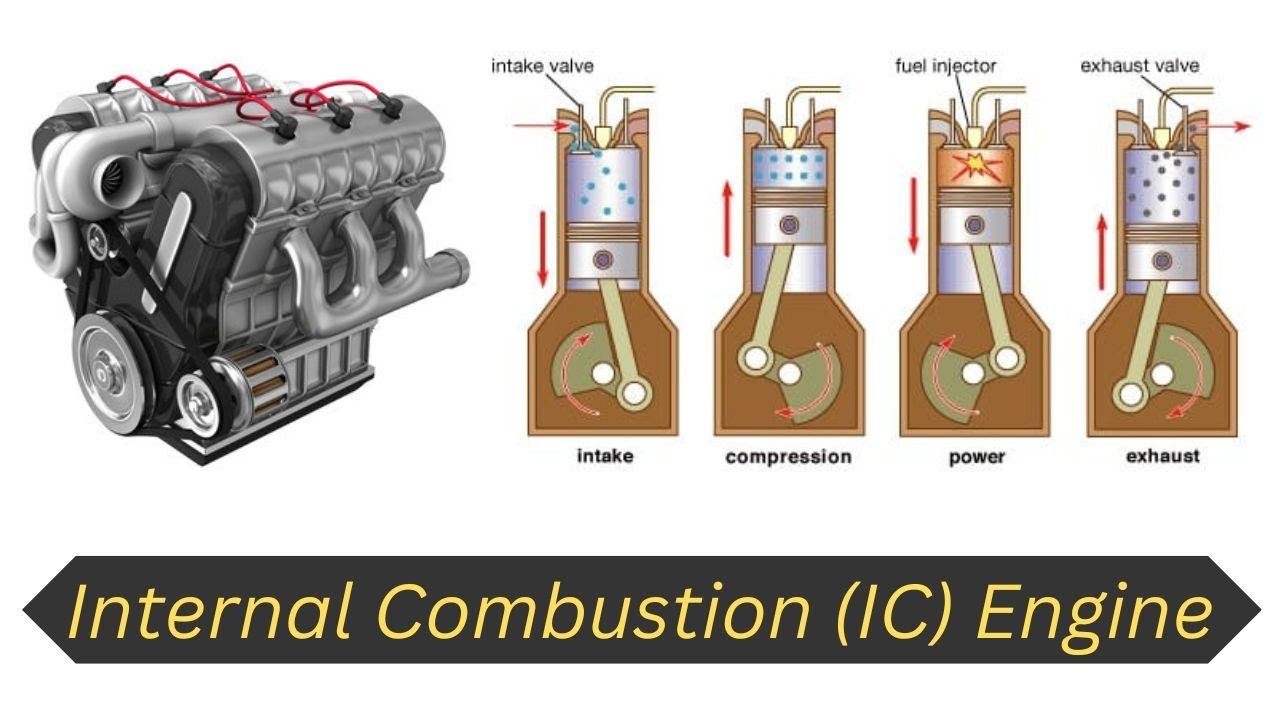
Most gasoline engines operate using four basic stages:
- Intake
- Compression
- Combustion
- Exhaust
This process repeats continuously while the engine runs.
Thousands of times every minute.
And honestly, this is where many people finally start understanding how engines actually work.
Intake Stroke
The first stage is intake.
During intake:
- air enters the cylinder
- fuel mixes with the incoming air
The piston moves downward, creating room inside the cylinder.
That allows the air-fuel mixture to enter.
Simple overall process.
Compression Stroke
Next comes compression.
The piston moves upward and squeezes the air-fuel mixture tightly inside the cylinder.
Compression matters because compressed fuel burns more effectively.
That’s one reason low compression can cause:
- weak performance
- rough idle
- engine misfires
- startup problems
The Internal Combustion Engine Explained Simply topic becomes much clearer once people understand compression.
Combustion Stroke
This is where the actual power happens.
A spark plug ignites the compressed air-fuel mixture.
That ignition creates a controlled explosion.
The explosion forces the piston downward with pressure.
That downward movement creates engine power.
This is the moment fuel energy becomes mechanical energy.
And honestly, this is the heart of the entire engine process.
Exhaust Stroke
After combustion happens, burnt gases still remain inside the cylinder.
The engine must remove them.
The piston moves upward again and pushes exhaust gases out through the exhaust valves.
Then the cycle repeats again.
Continuously.
That’s why engines generate:
- heat
- vibration
- sound
- wear
Over time.
Why Engines Have Multiple Cylinders
Some people ask why engines need more than one cylinder.
The answer is smoother power delivery.
More cylinders usually create:
- smoother operation
- stronger acceleration
- better balance
- increased power output
Common engine layouts include:
- inline-4
- V6
- V8
Each design has different advantages depending on:
- fuel economy
- towing needs
- performance goals
- reliability preferences
The Internal Combustion Engine Explained Simply topic helps buyers understand why different vehicles use different engine types.
Why Engine Size Matters
Engine size affects:
- horsepower
- torque
- fuel consumption
- towing capability
Larger engines usually produce:
- more power
- stronger acceleration
- higher towing capacity
Smaller engines often provide:
- better fuel economy
- lower operating costs
- lighter vehicle weight
That’s why modern vehicles use many different engine sizes depending on their purpose.
Turbocharged Engines Explained
Turbochargers became extremely common in modern vehicles.
A turbocharger forces extra air into the engine.
More air allows more fuel to burn.
That creates more power.
This is why smaller turbocharged engines can sometimes produce horsepower similar to older larger engines.
Turbocharged engines became popular because manufacturers wanted:
- more efficiency
- better fuel economy
- improved performance
At the same time.
Why Diesel Engines Work Differently
Diesel engines are also internal combustion engines, but they work differently from gasoline engines.
Diesel engines use:
- extremely high compression
- diesel fuel
- heat ignition
Instead of spark plugs.
Diesel engines are known for:
- strong torque
- fuel efficiency
- heavy-duty durability
That’s why many:
- trucks
- commercial vehicles
- industrial machines
Use diesel power.
Why Engines Eventually Wear Out
All internal combustion engines wear down eventually.
That’s completely normal.
Engines contain many moving parts constantly creating:
- friction
- heat
- pressure
Over time, internal wear happens.
Common causes of engine failure include:
- overheating
- poor maintenance
- oil starvation
- timing failures
- high mileage
This is one reason the Internal Combustion Engine Explained Simply topic matters.
Understanding engine basics helps people understand engine problems.
Why Oil Matters So Much
Oil is critical inside any engine.
Without oil:
- metal parts grind together
- friction increases
- heat rises rapidly
- internal damage happens fast
That’s why regular oil changes matter so much.
Good lubrication helps engines last significantly longer.
And honestly, many major engine failures begin because maintenance was ignored too long.
Why Used Engines Stay in High Demand
Once an engine fails badly, buyers usually face two choices:
- rebuild the engine
- replace the engine
And honestly, rebuilding engines became expensive.
That’s one reason replacement engine demand keeps growing worldwide.
Many buyers now search for:
- tested used engines
- affordable replacement motors
- low-mileage engines
- complete engine assemblies
Instead of rebuilding damaged engines.
Why Buyers Choose Used Engines
A lot of vehicles still have:
- good transmissions
- clean interiors
- strong suspension
- reliable drivetrains
But the engine fails.
Replacing the whole vehicle may not make financial sense.
That’s why many buyers purchase:
- tested replacement engines
- affordable used motors
- donor vehicle engines
Instead.
The Internal Combustion Engine Explained Simply guide helps buyers understand why replacement engines continue being practical and affordable solutions.
Specifications of Common Internal Combustion Engines
Engine Types
Inline-4, V6, V8
Fuel Types
Gasoline or Diesel
Cooling System
Water-Cooled
Induction
Naturally Aspirated or Turbocharged
Horsepower
Varies depending on engine
Torque
Varies depending on application
Transmission Compatibility
Manual or Automatic
Condition
Depends on the individual engine
Why Engine Testing Matters
Smart buyers usually request:
- compression testing
- startup videos
- mileage details
- donor vehicle information
Before purchasing used engines.
And honestly, testing information matters much more than marketing language.
Buyers want confidence before installation.
That’s completely understandable.
Worldwide Shipping of Replacement Engines
Replacement engines are shipped globally every day.
Shipping methods often include:
- pallet freight
- container shipping
- logistics handling
- cargo transport
Worldwide buyers often include:
- repair shops
- mechanics
- exporters
- rebuilders
- vehicle owners
Demand for affordable replacement engines remains strong internationally.
Common Buying Mistakes
Ignoring Compatibility
Not every engine fits every vehicle directly.
Always verify:
- model year
- engine size
- VIN compatibility
- sensor configuration
Before purchasing.
Buying Unknown Condition Engines
Buyers should request:
- photos
- testing information
- mileage
- running condition details
Whenever possible.
Choosing Price Over Quality
The cheapest engine isn’t always the smartest choice.
Sometimes slightly higher pricing for:
- tested inventory
- lower mileage
- cleaner condition
Can save much larger repair costs later.
What We Try To Do
A lot of buyers hate surprises after purchasing engines online.
Honestly, so do we.
That’s why we try to keep information straightforward from the beginning.
If an engine has:
- visible wear
- mileage details
- testing information
- cosmetic issues
Buyers should know upfront.
People shopping for engines usually care more about honesty than exaggerated sales talk.
Why Learning About Engines Matters
The Internal Combustion Engine Explained Simply topic matters because basic engine knowledge helps buyers make smarter decisions.
Once people understand:
- how engines create power
- why engines fail
- how maintenance affects reliability
- why testing matters
They usually feel much more confident purchasing replacement engines.
And honestly, that confidence matters.
Final Thoughts on Internal Combustion Engine Explained Simply
The Internal Combustion Engine Explained Simply topic continues helping people understand one of the most important mechanical systems ever created.
Engines may look complicated initially, but the basic idea is simple:
- fuel burns
- pistons move
- power gets created
- wheels turn
Once buyers understand that process, everything else starts making more sense:
- maintenance
- repairs
- replacement engines
- used engine buying
And honestly, understanding engines helps people avoid expensive mistakes later.
FAQ
What is an internal combustion engine?
An engine that burns fuel internally to create power.
Why do engines need fuel?
Fuel provides the energy needed for combustion.
What causes engine power?
Controlled combustion inside the cylinders pushes pistons and creates movement.
Why do engines need oil?
Oil reduces friction and protects moving engine parts.
What is compression in an engine?
Compression squeezes the air-fuel mixture before ignition.
Why do engines fail?
Common causes include overheating, poor maintenance, oil starvation, and wear.
What is a turbocharged engine?
A turbocharged engine forces additional air into the engine to increase power.
Why do buyers purchase used engines?
Because replacement engines are often more affordable than rebuilding or replacing vehicles.
Can used engines be shipped worldwide?
Yes. International engine shipping is common.
Why does Internal Combustion Engine Explained Simply matter?
Because understanding engine basics helps buyers make smarter maintenance and replacement decisions.
Cheap vs Premium Used Engines for Sale 2
Cooling System Tips for Used Car Engines 2
Cheap Engines for Sale Near Me (Online Options)
Posts Widget




Best Auto Motors
USA HERALD MAGAZINE INC
Buy the best quality engines from our website online and get a fast delivery within 6 days.
Copyright 2022.KlbTheme . All rights reserved