

Types of Car Engines Explained for Buyers
Types of Car Engines Explained for Buyers
Most people don’t really think much about engines until something goes wrong.
That’s usually when the search starts.
Suddenly people are online trying to understand:
- engine types
- engine sizes
- fuel systems
- turbocharged engines
- V6 vs V8
- diesel vs gasoline
And honestly, it gets confusing fast.
A lot of buyers searching for replacement motors quickly realize they don’t actually know which engine fits their vehicle or which engine type makes the most sense for their needs.
That’s exactly why understanding the Types of Car Engines Explained for Buyers matters so much before spending money on repairs or replacements.
Because not every engine is built for the same purpose. Types of Car Engines Explained for Buyers
Some engines focus on:
- fuel economy
- towing power
- performance
- durability
- daily commuting
Others are designed mainly for:
- heavy-duty work
- speed
- long-distance driving
Knowing the difference helps buyers avoid expensive mistakes later. Types of Car Engines Explained for Buyers
Why Engine Knowledge Matters More Today
Modern vehicles have become much more complicated than older cars.
Years ago engines were simpler.
Now buyers deal with:
- turbochargers
- hybrid systems
- direct injection
- variable valve timing
- electronic engine management
That’s why searches for Types of Car Engines Explained for Buyers continue growing worldwide.
People want to understand what they’re buying before replacing an engine.
Especially because engines are expensive now.
What an Engine Actually Does
At the most basic level, the engine creates power that moves the vehicle.
Fuel and air enter the engine.
Combustion happens inside the cylinders.
That energy turns the crankshaft.
Then power reaches the wheels.
Simple idea.
But the way different engines create that power changes how the vehicle:
- drives
- accelerates
- sounds
- consumes fuel
- handles heavy loads
That’s why the Types of Car Engines Explained for Buyers matter so much when choosing a replacement engine.
Inline 4-Cylinder Engines
The inline 4-cylinder engine is one of the most common engine types worldwide.
A lot of:
- compact cars
- sedans
- crossovers
Use 4-cylinder engines because they balance:
- fuel economy
- lower maintenance costs
- everyday reliability
Very well.
Buyers searching for Types of Car Engines Explained for Buyers often start here because 4-cylinder engines are extremely common.
Why 4-Cylinder Engines Became So Popular
Fuel economy is a major reason.
Smaller engines usually burn less fuel compared to larger V6 or V8 engines.
That’s why manufacturers use them heavily in:
- commuter cars
- economy vehicles
- smaller SUVs
Modern turbocharged 4-cylinder engines also produce much more power than older versions did years ago.
V6 Engines
V6 engines are extremely popular because they balance:
- power
- smoothness
- daily comfort
A V6 engine uses six cylinders arranged in a “V” shape.
A lot of:
- SUVs
- trucks
- larger sedans
Use V6 engines because they offer more power than 4-cylinder setups without the fuel consumption of larger V8 engines.
That’s why many buyers searching for Types of Car Engines Explained for Buyers end up considering V6 options.
Why Buyers Like V6 Engines
V6 engines usually provide:
- smoother acceleration
- better towing capability
- stronger highway performance
Compared to smaller engines.
They also tend to feel less strained under heavy loads.
That matters for:
- family SUVs
- towing
- long-distance driving
V8 Engines
V8 engines are usually associated with:
- muscle cars
- trucks
- performance vehicles
- larger SUVs
These engines use eight cylinders in a V-shaped layout.
Buyers searching for Types of Car Engines Explained for Buyers usually recognize V8 engines because of:
- strong acceleration
- deep exhaust sound
- towing capability
And honestly, many people simply enjoy how V8 engines feel and sound.
Why V8 Engines Stay Popular
Even though smaller turbo engines became more common, V8 engines still have strong demand worldwide.
Especially for:
- trucks
- performance cars
- towing vehicles
People still search heavily for used V8 replacement engines because they’re known for:
- torque
- durability
- strong pulling power
Diesel Engines
Diesel engines work differently from gasoline engines.
Instead of spark plugs igniting fuel, diesel engines use compression ignition.
Diesel engines are extremely popular for:
- trucks
- commercial vehicles
- heavy-duty towing
- long-distance driving
That’s why diesel topics appear often in Types of Car Engines Explained for Buyers searches.
Why Diesel Engines Are Popular
Diesel engines usually provide:
- excellent torque
- strong towing capability
- better fuel economy under heavy loads
- longer engine lifespan
Especially in trucks.
That’s why many buyers still prefer diesel engines despite higher repair costs in some situations.
Turbocharged Engines
Turbocharged engines became much more common in recent years.
A turbocharger forces additional air into the engine, helping smaller engines produce more power.
That’s why many modern:
- 4-cylinder engines
- V6 engines
Now feel much stronger than older naturally aspirated engines.
Turbocharging changed the market completely.
Why Manufacturers Use Turbo Engines
Turbo engines help manufacturers improve:
- fuel economy
- emissions
- power output
At the same time.
That’s why many buyers searching for Types of Car Engines Explained for Buyers now compare:
- turbocharged engines
- naturally aspirated engines
Before purchasing.
Naturally Aspirated Engines
Naturally aspirated engines do not use turbochargers or superchargers.
Air enters naturally through normal engine intake vacuum.
A lot of drivers still prefer naturally aspirated engines because they usually feel:
- smoother
- simpler
- more predictable
Especially long term.
Hybrid Engines
Hybrid vehicles combine:
- gasoline engines
- electric motors
To improve fuel economy.
Hybrid systems became more common because manufacturers focused heavily on:
- fuel savings
- emissions reduction
Some buyers specifically search hybrid replacement engines now because hybrid vehicles continue growing worldwide.
Electric Vehicles Changed the Market Too
Electric vehicles technically do not use traditional engines.
They use electric motors instead.
But internal combustion engines still dominate globally because:
- repairs are easier
- fuel access is widespread
- replacement engines remain available
That’s why searches for Types of Car Engines Explained for Buyers still remain extremely strong.
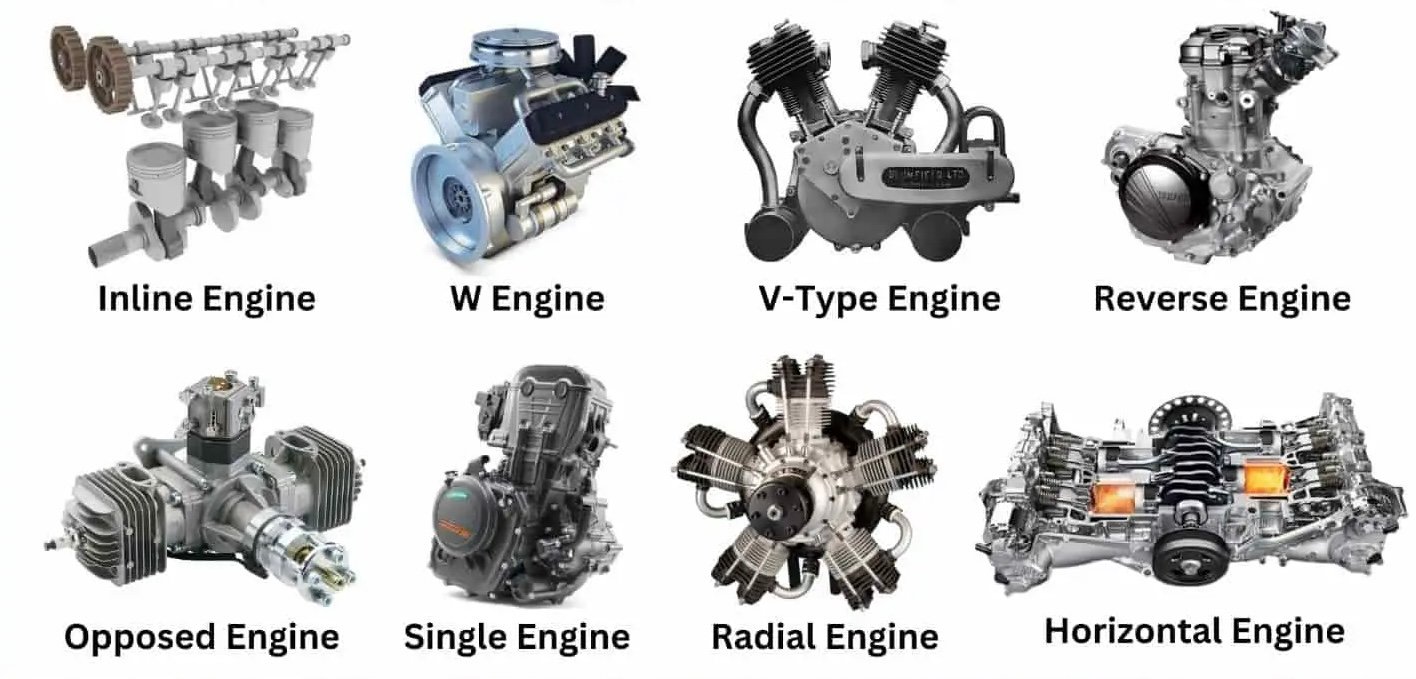
Common Engine Layouts Buyers Should Know
Inline Engines
Cylinders arranged in a straight line.
Common in:
- compact cars
- sedans
- economy vehicles
V-Shaped Engines
Cylinders arranged in a V formation.
Common in:
- trucks
- SUVs
- performance vehicles
Boxer Engines
Cylinders lay flat horizontally.
Popular in certain:
- Subaru vehicles
- Porsche models
These engines create a lower center of gravity.
Why Engine Compatibility Matters
This part matters a lot.
Not every engine automatically fits every vehicle.
Even similar engines may use:
- different electronics
- different sensors
- different wiring
- different emissions systems
That’s why compatibility checks matter before purchasing replacement engines.
Buyers searching for Types of Car Engines Explained for Buyers should always verify:
- VIN compatibility
- engine codes
- transmission compatibility
Before ordering.
Used Engines Became Extremely Popular Worldwide
Engine replacement costs continue rising.
That’s why more buyers now search for:
- affordable used engines
- tested replacement motors
- low-mileage engines
Instead of buying brand-new vehicles.
A properly maintained used engine can save buyers thousands.
Specifications of Common Car Engines
Engine Types
4-Cylinder / V6 / V8 / Diesel / Hybrid
Fuel Types
Gasoline / Diesel / Hybrid
Horsepower Range
Approximately 100 HP to 700+ HP depending on engine
Turbocharged Options
Available on many modern engines
Cooling System
Liquid-Cooled
Engine Condition
Used / Tested / Rebuilt depending on inventory
Mileage
Varies depending on engine
Availability
Depends on current stock
Why Buyers Search for Replacement Engines Online
Online suppliers now offer:
- larger inventory
- worldwide shipping
- better pricing comparisons
- easier engine searches
That’s why online engine sales continue growing worldwide.
A lot of buyers searching for Types of Car Engines Explained for Buyers eventually begin searching for actual replacement engines afterward.
Shipping Engines Worldwide
Replacement engines are shipped internationally every day.
Shipping usually includes:
- pallet securing
- freight handling
- export preparation
- loading support
Worldwide shipping became extremely common in the used engine industry.
What We Try To Do
Nobody likes surprises after buying a replacement engine.
So we try to keep things straightforward.
If an engine has:
- higher mileage
- cosmetic wear
- missing accessories
- visible damage
That should be explained upfront.
Buyers may request:
- photos
- videos
- compatibility information
- warranty details
- shipping information
Before moving forward.
That honesty matters.
Common Mistakes Buyers Make
Buying the Wrong Engine Type
Always confirm:
- engine code
- compatibility
- electronics setup
Before ordering.
Ignoring Long-Term Maintenance Costs
Some engines cost more to maintain long term.
That matters.
Buying Only Based on Price
The cheapest engine is not always the best engine.
Condition matters more.
Why Engine Knowledge Helps Buyers Save Money
Understanding the Types of Car Engines Explained for Buyers helps people:
- avoid compatibility mistakes
- choose better replacement engines
- understand maintenance costs
- compare fuel economy
- understand performance differences
Before spending money.
That knowledge matters more than most people realize.
Final Thoughts on Types of Car Engines Explained for Buyers
Learning the Types of Car Engines Explained for Buyers helps make engine shopping much less confusing.
Every engine type has strengths and weaknesses depending on:
- driving style
- budget
- fuel economy goals
- towing needs
- performance expectations
The important thing is understanding what fits your vehicle and your actual needs.
That’s how buyers make smarter long-term decisions when replacing engines.
FAQ
What are the most common car engine types?
4-cylinder, V6, V8, diesel, hybrid, and turbocharged engines.
Which engine type is best for fuel economy?
Usually smaller 4-cylinder or hybrid engines.
Why are V8 engines popular?
Because of strong power, towing capability, and performance.
Are turbocharged engines reliable?
Many are reliable when maintained properly.
What engine is best for towing?
V6, V8, and diesel engines are commonly preferred for towing.
Why do buyers choose used engines?
Used engines are usually much more affordable than new ones.
Can replacement engines be shipped internationally?
Yes. Worldwide shipping is common.
Why does engine compatibility matter?
Different vehicles may use different electronics, sensors, and engine setups.
What should buyers check before purchasing an engine?
Mileage, compatibility, testing information, and condition details.
How do I buy a replacement engine?
Contact directly, confirm compatibility and condition details, then arrange shipping or pickup.
Cheap vs Premium Used Engines for Sale 2
Cooling System Tips for Used Car Engines 2
Cheap Engines for Sale Near Me (Online Options)
Posts Widget




Best Auto Motors
USA HERALD MAGAZINE INC
Buy the best quality engines from our website online and get a fast delivery within 6 days.
Copyright 2022.KlbTheme . All rights reserved