


Best Place to Buy Used Engines: A Buyer’s Guide That Actually Helps
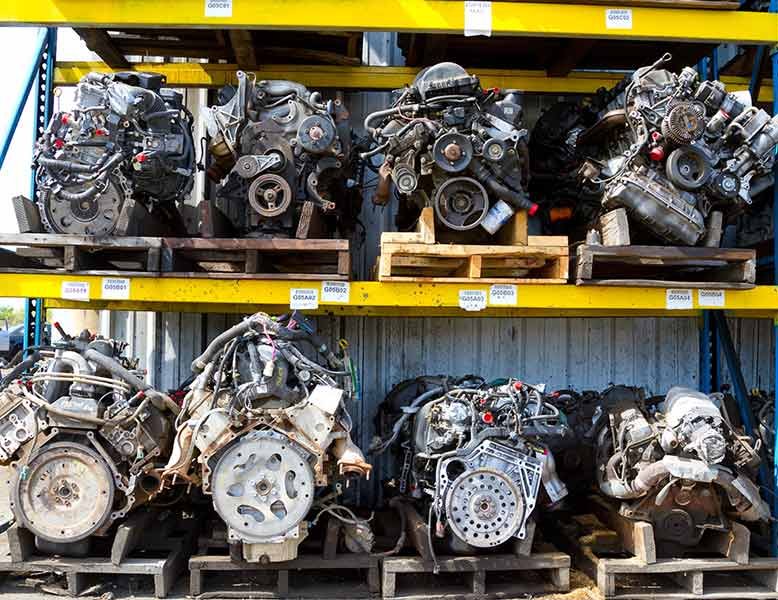
If you’ve spent any time searching for the best place to buy used engines, you already know the problem: everyone claims to have the lowest mileage, the cleanest compression numbers, and the fastest shipping. Most of that is marketing. Here’s what actually separates a seller worth trusting from one that will leave you holding a cracked block three states away from home.
We sell tested used engines to buyers on every continent, so this isn’t a theoretical guide. It’s built from the same questions our own customers ask before they commit to an engine that’s going to sit under their hood for the next 100,000 miles.
What “best” actually means when you’re engine shopping
A lot of people searching for the best place to buy used engines assume “best” means “cheapest.” It doesn’t, not really. The cheapest engine on the internet is the one you buy twice — once from the seller who ships you a cracked head, and once from the seller who ships you the one that actually runs. What “best” should mean is: documented mileage, a compression test you can see, a return window that isn’t a trap, and a seller who answers the phone after the sale, not just before it.
That’s the filter worth applying to every option below, whether it’s a corner junkyard or an international exporter.
Where people actually source used engines
| Source | Typical condition | Shipping range | Warranty norm |
|---|---|---|---|
| Local salvage yard | Pull-and-sell, rarely bench-tested | Local pickup only | 30 days or none |
| Online classifieds / marketplaces | Unverified, seller-reported | Buyer arranges own freight | None |
| Big-box remanufacturers | Rebuilt, not original take-out | Domestic mostly | 1-3 years, higher price |
| Specialist used engine exporters | Compression-tested, mileage-verified | Worldwide, door to door | 90 days to 1 year |
That last row is where we sit, and it’s worth explaining why the model works. Buying a low-mileage, tested used engine and shipping it internationally is usually cheaper than a local remanufactured unit, even after freight — because you’re paying for a real engine with real service history, not a rebuild with new gaskets wrapped around old fatigue.
What a genuinely good seller checks before it’s listed
This is the part most buyers never see, and it’s the part that actually matters. Before an engine goes up for sale, it should go through:
- Compression test on every cylinder, with numbers recorded, not just “runs great”
- VIN or engine tag cross-check against the donor vehicle to confirm the exact variant
- Visual inspection of the block, heads, and oil pan for cracks or repair welds
- Oil and coolant inspection for metal shavings or coolant intrusion, both signs of internal damage
- Mileage documentation pulled from the donor vehicle’s odometer or service records
If a seller can’t show you at least the compression numbers and the mileage source, that’s not the best place to buy used engines — that’s a gamble with your money.
Engine specifications you should ask for on any unit
Every used engine listing should be able to answer these questions before you pay a deposit:
| Spec | Why it matters |
|---|---|
| Engine code / RPO code | Confirms exact fitment for your VIN, not just the model name |
| Displacement (liters) | Must match your vehicle’s factory spec unless you’re doing a swap |
| Mileage at pull | Under 75,000 miles is generally considered low-risk for a used engine |
| Compression range (PSI) | Even readings across cylinders, typically 130-190 PSI depending on the engine |
| Fuel type | Gasoline, diesel, or hybrid-assist — swapping fuel types isn’t a drop-in job |
| Included accessories | Long block vs. complete engine with intake, turbo, wiring harness, etc. |
We list this data on every listing, including our L86 6.2L V8, our BMW S65B44, and our Mazda Skyactiv-G 2.5L, because a customer 8,000 miles away has no other way to judge what they’re buying. If you want a refresher on how compression testing and internal combustion fundamentals actually work, SAE International publishes technical standards the entire industry builds engine testing procedures around.
Shipping: the part that decides whether “best” is even possible for you
A great engine at a great price is worthless if it can’t reach you intact. The engines we ship go out on reinforced pallets, engine bolted down through the mounting points, oil and coolant drained to meet freight carrier requirements, and openings sealed to keep debris out during transit. For international orders, we handle the export documentation — commercial invoice, packing list, and certificate of origin where required — so the engine clears customs without sitting in a warehouse for three weeks.
Sea freight is the standard for most overseas orders because it keeps cost per kilogram low on something as heavy as an engine block. Air freight is available for buyers who need the unit fast and are willing to pay the premium. Either way, ask for a tracking number before you release final payment, not after.
Warranty terms that actually protect you
A 1-year warranty sounds better than a 90-day one until you read the fine print. What matters more than the length is what’s covered: internal mechanical failure, yes or no; labor reimbursement, yes or no; and whether the warranty survives international shipping or gets voided the moment the engine leaves the seller’s country. Ask these three questions before you buy, not after something goes wrong.
Red flags worth walking away from
- No compression numbers, only “tested and running”
- Photos that don’t match the listed engine code
- Pressure to wire full payment before any documentation is sent
- No physical address or business registration listed anywhere
- Reviews that are all five stars and posted within the same week
None of these automatically mean a scam, but stacked together they’re a pattern worth taking seriously.
How pricing actually works on used engines
People searching for the best place to buy used engines are usually chasing a number, so it’s worth explaining what actually moves the price. Mileage is the biggest factor — a 40,000-mile pull commands more than a 120,000-mile one even if both test clean. Engine configuration matters too: a turbocharged variant with forced induction hardware intact costs more than the naturally aspirated version of the same block, because the turbo, intercooler piping, and wiring add real teardown labor and part value. Completeness is the third lever. A long block (engine only) is cheaper than a complete engine with accessories, intake manifold, and wiring harness attached, simply because there’s less included.
What shouldn’t move the price much is geography, at least not on our end — we quote the same engine at the same base price whether it’s shipping to a buyer three hours away or three oceans away. Freight is calculated separately and disclosed up front, not buried in an inflated “engine price” that quietly covers shipping without telling you.
One thing worth watching for: sellers who quote a price far below everyone else for the same engine code, same mileage bracket, and same completeness. That gap usually gets explained one of three ways — the mileage is unverified, the compression wasn’t actually tested, or there’s a hidden fee waiting at checkout. None of those make it the best place to buy used engines; they just make it the cheapest quote on the page.
What documentation you’ll need on your end
Buying is straightforward, but importing across a border adds a few extra steps depending on where you’re located. Most buyers need:
- A commercial invoice matching the declared value (we provide this)
- A packing list describing the engine, weight, and dimensions (we provide this)
- Proof of your local business registration or ID, if your country requires it for vehicle-part imports
- In some regions, a pre-shipment inspection certificate or import permit specific to used engines
We’ve shipped to import authorities with wildly different requirements — some clear a used engine in two days, others want extra paperwork before it leaves the port. If you’re not sure what your country requires, ask your freight forwarder or customs broker before you place the order, not after the engine is already at sea.
A quick walkthrough of a typical order
To make this concrete: a buyer contacts us looking for a replacement for a vehicle with a failed head gasket. We confirm the engine code from their VIN, pull up matching inventory, and send compression numbers, mileage, and photos of the actual unit — not stock photography. Once they confirm fitment, we invoice for the engine and freight separately so the cost breakdown is visible. The engine gets drained, sealed, palletized, and handed to the freight carrier within a few business days. Export paperwork goes out with the shipment and a digital copy goes to the buyer immediately, so their customs broker can start clearing it before the engine even arrives at port.
That sequence — verify fitment, disclose condition honestly, ship properly, hand over documentation early — is the actual differentiator between the best place to buy used engines and a seller who’s just listing whatever’s sitting in the yard.
Installing a used engine: what changes versus new
Mechanically, installing a tested used engine isn’t different from installing a new one — same mounts, same bolt pattern, same wiring if the engine code matches your donor vehicle. What does change is the pre-install checklist. Before dropping in a used engine, it’s worth replacing wear items that don’t show up on a compression test: timing belt or chain if it’s due, water pump, thermostat, and all fluids. None of these are expensive compared to the engine itself, and skipping them is the single most common reason a good used engine gets blamed for a problem it didn’t cause.
It’s also worth flushing the cooling system on the vehicle side before installation, particularly if the old engine failed from overheating. Contaminated coolant from the previous engine can cause premature wear on a perfectly healthy replacement.
Used vs. remanufactured vs. new: the real tradeoffs
A remanufactured engine gets torn down, machined, and rebuilt with new wear parts — pistons, bearings, seals — around a used core. That process costs labor and parts, which is why remanufactured units typically run 2-3x the price of a tested used engine with comparable mileage. What you’re paying for is predictability: every remanufactured unit theoretically starts from the same baseline tolerances, regardless of what the original owner did to it.
A tested used engine skips that rebuild and sells the block as it came out of the donor vehicle, verified through compression testing and inspection rather than rebuilt from scratch. For an engine that was well maintained and pulled with modest mileage, this is often the better value — you’re getting factory-original tolerances instead of aftermarket machining, at a fraction of the cost. The tradeoff is that quality depends entirely on the seller’s testing standards, which is why the vetting steps earlier in this guide matter so much.
New OEM engines exist for some platforms but are frequently unavailable for anything more than a few years old, and where they are available, pricing is usually 4-6x a tested used equivalent. For most buyers outside of warranty-driven fleet purchases, new isn’t a realistic comparison point at all.
Frequently asked questions
Is a used engine actually reliable, or should I just buy new?
A tested, low-mileage used engine from a reputable exporter is often more reliable than a cheap remanufactured unit, because it was built and broken in by the original manufacturer rather than rebuilt on a production line. New OEM engines exist, but they’re usually 3-5x the price of a good used unit for the same fitment.
How long does international engine shipping take?
Sea freight typically runs 2-6 weeks door to door depending on the destination port and customs processing. Air freight can cut that to under a week but costs significantly more per kilogram.
What mileage is considered “low” for a used engine?
Under 75,000 miles is generally treated as low-risk across most gasoline engines. Diesel engines are often rated reliable well past 150,000 miles given proper maintenance history.
Should I replace the engine mounts when installing a used engine?
It’s worth inspecting them regardless of engine condition. Mounts degrade with age and vibration independent of the engine itself, and worn mounts can cause noise and vibration that gets mistakenly blamed on the replacement engine.
Can I get a used engine tested again after it arrives, before I install it?
Yes, and it’s a good practice. A local mechanic can re-check compression and do a visual inspection on arrival, which also gives you documented proof of condition if you ever need to make a warranty claim.
Do I need to worry about emissions compliance when importing a used engine?
Depending on your country’s import rules, yes — some regions restrict engines above a certain age or emissions tier. It’s worth checking your local vehicle registration authority before ordering, particularly for older diesel units.
The bottom line
The best place to buy used engines isn’t defined by the lowest price on the page — it’s defined by whether the seller can prove what they’re selling before you pay for it. Compression numbers, mileage documentation, real photos, and a shipping process built for the actual weight and fragility of an engine block. That’s the standard we hold every listing to, and it’s the standard worth demanding from anyone else you’re considering.
Browse our current inventory of tested engines, including options like the Isuzu 4JJ1-TCX, or read our guide to used long block engines if you’re still deciding which configuration fits your rebuild.
Posts Widget




Best Auto Motors
USA HERALD MAGAZINE INC
Buy the best quality engines from our website online and get a fast delivery within 6 days.
Copyright 2022.KlbTheme . All rights reserved
