

Nissan VQ37VHR Engine Price: What This 370Z V6 Costs

If you’ve been shopping around for a Nissan VQ37VHR engine price, you’ve probably noticed the numbers are all over the place. One listing says $1,800, another wants $4,500 for what looks like the same engine, and a “complete” swap kit somewhere in between makes you wonder what you’re actually paying for. We sell these engines every week, so let’s cut through it: a solid used or professionally rebuilt VQ37VHR typically runs somewhere between $1,800 and $3,800 depending on mileage, documentation, and what’s bolted to it, and right now we have a tested, low-mileage unit in stock at $2,400 — right in the sweet spot for a buyer who wants a real engine, not a gamble.
That’s the short answer. The longer answer — why prices swing so much, what actually makes one VQ37VHR worth more than another, and what you should be checking before you wire money to anybody — is what the rest of this is about. This engine has a well-earned reputation, and it’s one of the few used Japanese V6s where the demand genuinely outpaces the supply of good, honest examples. That scarcity is exactly why price of a VQ37VHR unit varies so much from seller to seller, and why a search for “VQ37VHR for sale” turns up such a wide spread of asking prices for what’s supposedly the same engine.
What the VQ37VHR Actually Is
The VQ37VHR is Nissan’s 3.7-liter naturally aspirated V6, the engine that replaced the well-liked VQ35HR when Nissan rolled out the 370Z and the Infiniti G37 for the 2008 model year. It’s part of the larger VQ engine family, a lineup that’s been on Ward’s 10 Best Engines list more times than any other engine in the award’s history. The VQ37VHR was the top of that family — bigger bore, longer stroke, and Nissan’s first application of VVEL (Variable Valve Event and Lift), which is basically Nissan’s answer to variable valve lift systems from Honda and BMW, paired with CVTCS for cam timing control on both intake and exhaust sides.
In plain terms: it’s a 3,696cc, 60-degree V6 with DOHC heads, multi-point fuel injection, an 11.0:1 compression ratio, and a bore and stroke of 95.5mm x 86mm. Depending on the chassis and tune, output lands between 332 and 350 horsepower with 270 to 276 lb-ft of torque, and it’ll spin to a 7,500 rpm redline without complaint. It wants premium unleaded, and it rewards you for feeding it that with a surprisingly eager, high-revving character that a lot of modern turbo V6s can’t match. If you’ve driven a 370Z, that’s the engine doing the talking.
The VQ family goes back to the early 1990s, but the “VHR” designation on this particular version means something specific — it’s the high-revving variant, tuned for output and response rather than pure low-end grunt. Nissan built earlier VQ variants (VQ35DE, VQ35HR) that most enthusiasts already know, and the VQ37VHR is really the final, most refined evolution of that line before Nissan started shifting toward turbocharged four-cylinders and the VR-series in its performance cars. That matters for a buyer because it means the VQ37VHR benefited from over a decade of refinement on a platform Nissan already knew worked — it wasn’t a first-generation design with first-generation problems.
One more thing worth knowing if you’re new to this engine: despite sharing a family name and a lot of architecture with the VQ35HR that came before it, the VQ37VHR isn’t a drop-in replacement for it. The bore is different, the VVEL hardware is unique to the 37, and the ECU and harness are not interchangeable without adapting them. If a seller tells you a VQ37VHR harness will just plug into a VQ35 car, or vice versa, get a second opinion before you buy.
The reliability and horsepower numbers are the practical reason most buyers care about the VQ37VHR at all, but a lot of the passion around this engine also comes from how it sounds and revs — it doesn’t feel like a big lazy V6, it feels like something that wants to be worked. That’s not a spec sheet quality, but it’s a real part of why people specifically hunt down this engine instead of just buying whatever V6 is cheapest.
If you want the full generational breakdown of every VQ variant Nissan ever built, it’s a decent rabbit hole to go down on your own time.
None of that changes the fact you’re here for a number, though — so let’s get back to what actually drives the Nissan VQ37VHR engine price up or down.
Which Cars Came With It
You’ll find the VQ37VHR under the hood of:
- Nissan 370Z (2009–2020, all trims including Nismo variants of the base engine)
- Infiniti G37 coupe and sedan (2008–2013)
- Infiniti Q50 (3.7L trims)
- Infiniti Q60 (3.7L trims)
That’s four different chassis spanning more than a decade of production, which is part of why the used market for this engine is so active. A parts yard or an engine importer might pull a VQ37VHR out of a wrecked Q50 sedan and sell it to somebody dropping it into a 370Z, and mechanically that’s a completely reasonable swap — the fitment and wiring vary a bit by generation and market, but the core engine is the same across all four cars.
What Actually Drives the Nissan VQ37VHR Engine Price
This is where most of the confusion in the used-engine market comes from, so let’s break it down honestly.
Used, Low-Mileage, or Rebuilt
A used VQ37VHR pulled from a wrecked or retired car and sold as-is, with no rebuild work, sits at the bottom of the range — usually $1,500 to $2,200 if the mileage is reasonable and the seller can show it ran before it came out of the car. A rebuilt or remanufactured unit, where the shortblock has been gone through, bearings and gaskets replaced, and the engine has actually been started and tested, commands more — often $3,000 to $4,500 depending on how thorough the rebuild was and who did it. Our in-stock engine sits in between those two worlds: it’s a tested low-mileage used unit, not a full rebuild, which is exactly why $2,400 is a fair number for what you’re getting rather than the top of the rebuilt bracket.
Mileage and Documented History
Mileage matters, but honestly not as much with a VQ37VHR as it would with a lot of other engines — these things routinely run past 150,000 miles without a rebuild, and plenty go well past 200,000 with basic maintenance. What matters more is whether the seller can actually tell you the mileage and back it up. An engine pulled from a totaled car with a clean title history and a documented odometer reading is worth more than an unknown-mileage unit even if the unknown one is probably fine — because “probably fine” isn’t something you want to bet a swap on.
Accessories Included
This one trips people up constantly. A “$1,600 VQ37VHR” that turns out to be a bare longblock — no harness, no ECU, no intake manifold, no accessories — isn’t actually cheaper than a $2,400 engine that includes the wiring harness, ECU, alternator, and intake. Once you price out the missing pieces individually, the “cheap” engine usually ends up costing more. Always ask exactly what’s included before you compare prices between sellers.
Confirmed VVEL Functionality
Because the VQ37VHR’s VVEL system is more complex than a standard variable valve timing setup, a seller who can confirm the VVEL solenoids and actuators are functioning — not just that the engine runs, but that it’s not throwing VVEL-related codes — is offering something genuinely more valuable than one sold with a vague “runs great” and no real testing behind it. This is one of the first things we check before an engine goes up for sale, because a VVEL fault isn’t a small repair.
VQ37VHR Quick Specs
| Spec | Detail |
|---|---|
| Displacement | 3.7L (3,696 cc) |
| Configuration | V6, 60-degree bank angle |
| Bore x Stroke | 95.5mm x 86mm |
| Compression Ratio | 11.0:1 |
| Valvetrain | DOHC with VVEL and CVTCS |
| Fuel System | Multi-point injection, premium unleaded |
| Horsepower | 332–350 hp (application dependent) |
| Torque | 270–276 lb-ft |
| Redline | 7,500 rpm |
A Realistic Price Range — and Where Our Engine Sits
Pulling all of that together, here’s the honest breakdown of the Nissan VQ37VHR engine price you should expect across the market:
- Bare, unverified used longblock: $1,200–$1,800 — cheapest option, most risk, no accessories
- Tested used engine with accessories: $2,000–$2,800 — where our unit lives
- Professionally rebuilt or remanufactured: $3,200–$4,800 — new bearings, gaskets, often a warranty
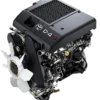
Our current unit — product ID 13507 — is priced at $2,400 and includes a genuine used VQ37VHR pulled from a documented donor vehicle, tested and verified before it went on the shelf. If you’re looking for the VQ37VHR engine cost that makes sense for a driver-quality 370Z or G37 build without paying rebuilt-engine money, that’s the range to be shopping in. You can see the full listing, photos, and current stock status on the Nissan VQ37VHR engine for sale page — worth checking directly since inventory on a popular engine like this one doesn’t sit around long.
Why This Engine Has the Reputation It Does
I’ve sold a lot of used engines over the years, and there’s a short list of ones that make my job easy because they just don’t fail people. The VQ37VHR is on that list. Owners routinely report these things crossing 200,000 miles with nothing more than normal maintenance — oil changes on schedule, coolant flushes, the usual. The VVEL system sounds exotic and it does add a layer of complexity over a simpler VVT setup, but in practice it’s been reliable enough that it’s rarely the reason one of these engines gets pulled from a car. That reliability is a big part of why the Nissan VQ37VHR engine price holds up better on the used market than a lot of other performance V6s.
What actually kills a VQ37VHR, in my experience, is neglect — skipped oil changes, a coolant leak that got ignored until it turned into overheating, or someone running it low on oil for months without noticing the consumption creeping up (which, to be fair, is a known trait of this generation of VQ — it’s not a burn-a-quart-a-week problem, but it’s worth checking levels more often than you would on some other engines). Buy one that was looked after and there’s genuinely no reason it shouldn’t outlive the rest of the car it’s going into.
What to Check Before You Buy a Used or Rebuilt VQ37VHR
Whether you’re buying from us or anybody else, here’s what actually matters:
- Compression or leak-down numbers — a seller who has these on hand and will share them is a seller who tested the engine, not just pulled it and photographed it.
- VVEL and timing chain condition — ask directly whether the VVEL system was checked and whether the timing chain and guides were inspected. Chain stretch shows up as a rattle on cold start.
- What’s actually included — harness, ECU, intake manifold, accessories, oil pan. Get a list, not a vague “everything you need.”
- Mileage documentation — a donor vehicle title, dash photo, or CARFAX-style history beats “low miles, trust me.”
- Coolant and oil leak history — even a healthy VQ can develop valve cover gasket seepage over time; that’s a minor fix, not a dealbreaker, but you want to know before it arrives, not after.
- Return policy and warranty — any legitimate seller of used engines stands behind what they sell. If there’s no warranty language anywhere, ask why.
None of this is complicated, but skipping it is how people end up with a $2,000 paperweight instead of a running engine. Ask the questions before you pay, not after the freight bill shows up.
It’s also worth asking how the engine was stored and handled before it got listed. An engine that sat outside for six months uncovered is a different proposition than one that came straight off a running car and went into a controlled warehouse. Surface rust on external components is cosmetic and easy to deal with; rust that got into the cylinders because the engine sat open to the weather is not something you find out about until it’s already installed.
Turbo and Supercharger Builds: A Word on Forced Induction
The VQ37VHR is a popular platform for boost, and for good reason — the block is strong, the factory internals hold up reasonably well at mild boost levels, and there’s a decent aftermarket around 370Z and G37 turbo and supercharger kits at this point. But I’ll say what a lot of sellers won’t: if you’re planning serious boost — double-digit psi, big power targets, track use — budget for forged internals and supporting fuel system work up front rather than finding out the factory pistons had a limit after you’ve already blown one up. Plenty of guys run mild boost (5-7 psi) on stock internals for years without issue, and that’s a realistic, popular path if you keep your expectations in check and your tune conservative.
Just don’t buy a stock used engine expecting it to shrug off 20 psi with the internals it came with — that’s not what this engine was built for, and no amount of it being “known reliable” changes that math.
If you’re building something more serious, it’s worth pricing a rebuilt unit with forged internals from the start rather than boosting a stock used engine and hoping. It costs more up front and saves you from doing the labor twice.
One thing that surprises people new to this platform: because the VQ37VHR has been a popular tuner engine for over fifteen years now, there’s a fair amount of accumulated knowledge in the 370Z and G37 communities about exactly where the factory limits sit, what fuel system upgrades pair well with which turbo kits, and which supporting mods actually matter versus which ones are just internet folklore. It’s worth spending a weekend reading before you spend money — the platform has been figured out at this point, you just have to find the right threads.
Common Questions About VQ37VHR Pricing
Is a used VQ37VHR a safe buy, or should I always pay more for a rebuild?
A tested, documented used engine is a safe buy in the vast majority of cases — this isn’t a fragile engine, and low-to-moderate mileage units with a clean history run for years without drama. A full rebuild makes more sense if you specifically want forged internals for a big-power build, or if the only used units you can find have unknown or high mileage with no testing behind them.
Why do prices for the “same” engine vary so much between sellers?
Mostly because “VQ37VHR” gets used as a catch-all label for everything from a bare, unverified longblock to a fully tested engine with a harness and ECU included, sitting next to a professionally rebuilt unit with forged pistons and a warranty. They’re not the same product, even though they get listed under the same name. Always ask what’s actually included before comparing two prices against each other.
What’s a fair Nissan VQ37VHR engine price for a straightforward daily-driver swap?
For a driver-quality build — no big power goals, just a healthy engine to replace a tired or blown one — the $2,000 to $2,800 range for a tested used unit with accessories is realistic and fair. That’s the bracket our current $2,400 engine sits in, and it’s the number we’d point most daily-driver buyers toward.
Does mileage alone tell me whether an engine is worth buying?
Not by itself. A 140,000-mile VQ37VHR with full documented maintenance history is a better buy than an “80,000-mile” engine with no proof and a seller who can’t answer basic questions about where it came from. Documentation matters as much as the number on the odometer.
How the VQ37VHR Compares to Other Used Engine Options
If you’re cross-shopping, it’s worth knowing where the VQ37VHR sits relative to other engines we move regularly. Nissan’s larger VK56VD V8, used in the Armada and Titan, is a different animal entirely — more displacement, more low-end torque, built for trucks rather than revs. If you’re specifically after a naturally aspirated V6 with a sporty character, the VQ37VHR is really in a class of its own among used Japanese engines, though we carry a broad range of options across our used V6 engines inventory if you want to compare specs and pricing side by side.
Buyers building a tuner project also sometimes look at BMW’s N54 twin-turbo inline-6 as an alternative path to similar power — factory turbo instead of adding your own — though the ownership experience and swap complexity are pretty different between the two. For a full look at what else is available in this segment, our used Japanese engines category covers everything from this VQ family up through the inline-sixes and V8s we stock.
Shipping and What to Expect After You Order
We ship worldwide, and a fair number of our VQ37VHR buyers are outside the US — this engine went into cars sold globally, so the demand for good used units follows that same map. Every engine we send out gets photographed and, where applicable, compression-tested before it leaves, and we’re upfront about mileage and history rather than dressing up a listing with vague language.
If you’re importing into a country with specific emissions or engine-swap documentation requirements, reach out before you order so we can make sure you get what you need on the paperwork side — we’ve done this enough times to know what most customs offices want to see. Wherever you’re ordering from, the Nissan VQ37VHR engine price quoted at checkout is the price you pay — no surprise fees added after the fact.
Bottom Line on Nissan VQ37VHR Engine Price
Don’t let the price spread across the used-engine market confuse the decision more than it needs to. A bare, unverified longblock in the $1,200–$1,800 range is a real gamble. A rebuilt engine at $3,200 and up is the safest bet but costs accordingly. A tested, documented used engine with accessories — the $2,000–$2,800 range — is where most buyers land, and where our $2,400 unit sits, ready to ship. It’s a genuine VQ37VHR pulled from a documented donor car, tested before listing, with the accessories that make it actually installable rather than a bare shortblock you have to source parts around.
If you’ve read this far, you already know more about pricing this engine than most of the listings you’ll come across. Take a look at the Nissan VQ37VHR engine for sale listing for current photos, exact mileage, and stock status, or reach out with questions about fitment for your 370Z, G37, Q50, or Q60 — we’ll tell you straight whether it’s the right engine for what you’re building, not just try to close the sale.
Posts Widget




Best Auto Motors
USA HERALD MAGAZINE INC
Buy the best quality engines from our website online and get a fast delivery within 6 days.
Copyright 2022.KlbTheme . All rights reserved