


Used Marine Diesel Engines for Sale – Tested, Warrantied & Shipped Worldwide
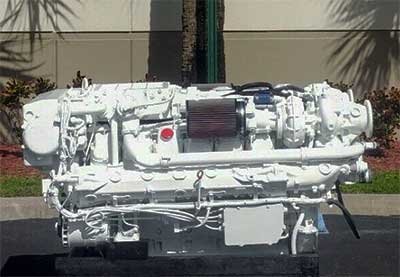
If you’re shopping for used marine diesel engines for sale, you already know the frustration. New replacement engines from the major marine brands routinely run $20,000 to $60,000 once you add installation, and the lead times can stretch past three months. Most boat owners simply don’t have that kind of time or budget sitting around, especially when the boat is out of the water and every week on the hard costs money. That’s the gap we work in. We source, pressure-test, and ship used marine diesel engines to boat owners, repower shops, and marine dealers in more than 40 countries, and we’ve built our whole process around one idea: you should know exactly what you’re buying before you pay for it.
This isn’t a general “we sell used engines” page. It’s specifically about marine diesels — inboard and sterndrive units pulled from sailboats, trawlers, sportfishers, workboats, and small commercial vessels. If you came here looking for used marine diesel engines for sale because your current engine threw a rod, hydrolocked, or just finally gave up after 6,000 hours, keep reading. We’ll walk through what these engines actually are, what specs matter, how we test them, and what it costs to get one shipped to your marina.
What Counts as a Marine Diesel Engine
A marine diesel is built differently than an automotive or industrial diesel, even when it shares a block with one. The main differences are the cooling system (raw water or keel cooling instead of a radiator and fan), the marine gearbox or sail-drive coupling, the flame-arrested intake, and corrosion-resistant components rated for saltwater exposure. When people search for used marine diesel engines for sale, they’re usually looking for one of three configurations:
- Inboard diesels — mounted inside the hull, connected to a shaft and propeller through a marine transmission. Common in sailboats, trawlers, and larger cruisers.
- Sterndrive (inboard/outboard) diesels — inboard-mounted but driving an outdrive unit through the transom. Popular on sportboats and smaller cruisers.
- Auxiliary/genset diesels — smaller displacement engines used to run onboard generators, often the same block family as the propulsion engine.
We carry all three, sourced from brands like Yanmar, Volvo Penta, Cummins, Caterpillar, Perkins, and Detroit Diesel marine variants. If a specific model isn’t listed on the site when you check, message us — a good chunk of our inventory turns over faster than the catalog gets updated, and we often have something in the yard that hasn’t been photographed yet.
Specifications Buyers Actually Need to Check
Every listing includes a spec sheet, but here’s the short version of what actually matters when you’re comparing used marine diesel engines for sale from different sellers:
| Spec | Typical Range | Why It Matters |
|---|---|---|
| Horsepower | 27 HP – 1,200+ HP | Must match your hull’s original engine class or your gearbox ratio |
| Cylinder count | 2 – 16 | Affects vibration, weight, and available mounting footprint |
| Displacement | 0.5L – 33L | Rough proxy for torque delivery at low RPM |
| Cooling type | Raw water, keel-cooled, heat exchanger | Determines what you need to re-plumb during install |
| Recorded hours | Varies by unit | We only list verified hour meters, not “estimated” hours |
| Gearbox ratio | 1.5:1 – 3:1 | Has to match your prop pitch or you’ll need to re-prop |
| Weight (dry) | 150 kg – 2,200+ kg | Matters for engine bed load rating and shipping cost |
Horsepower and gearbox ratio trip up more buyers than anything else. A lot of people call us wanting “the same HP” as their old engine, but if the new gearbox ratio doesn’t match, the boat either over-revs or never gets on plane properly. We ask for your make, model, and prop specs before we confirm a match — it’s a five-minute conversation that saves you from a $400 shipping mistake.
How We Test Every Engine Before It’s Listed
We don’t publish a listing for used marine diesel engines for sale until the unit has gone through our shop process, which includes:
- Compression test on every cylinder, recorded and included with your invoice
- Oil analysis for metal content, coolant intrusion, and fuel dilution
- Visual inspection of the raw water pump, heat exchanger, and injectors
- Turbo shaft play check on turbocharged models
- Run test where the engine and hour meter allow it — most inboard units get a wet run on a test stand
- Photo documentation of the block, serial tag, and any visible corrosion
Engines that fail compression or show metal in the oil don’t get listed as “tested and ready” — we either sell them as-is at a clearly reduced price with the failure noted, or we part them out. We’d rather lose a sale than have a customer find out three weeks after installation that we hid a problem.
Why Buy Used Instead of New or Remanufactured
New marine diesels are excellent engines, and if your budget supports one, that’s a fine choice. But most of the people who call us are working with one of these situations: insurance is only covering partial replacement cost, the boat’s resale value doesn’t justify a $40,000 repower, or they need the boat back in the water before the season ends and a factory-new unit is 14 weeks out. A low-hour used engine, properly tested, gets you back on the water for a fraction of the cost and usually within a week or two of shipping.
Remanufactured is the middle ground, and we sell those too when a customer specifically wants a fresh long block. But a lot of “reman” pricing on the market isn’t actually cheaper than a well-tested low-hour used unit — you’re often paying a premium for new gaskets and seals on an engine that’s mechanically no better than what we already have sitting with 1,800 verified hours on it.
Shipping and Delivery
We ship used marine diesel engines for sale to marinas, freight forwarders, and residential addresses worldwide. Domestic shipments inside the continental US typically move on a flatbed or in a crate depending on weight, and most orders leave our warehouse within 3-5 business days. International orders go through ocean freight to the nearest port, and we handle the export paperwork on our end — you or your customs broker handle import clearance on the receiving end. Engines are strapped to pallets or crated depending on size, with the block drained and stabilized for transit. You can check current shipping terms on our shipping policy page, or reach out through our inquiry form for a freight quote to your marina or port.
Warranty and What’s Covered
Every engine we sell as “tested” ships with a 30 to 90-day mechanical warranty depending on the model and hours, covering internal component failure. It doesn’t cover installation labor, gaskets consumed during the swap, or damage from improper cooling system setup — that part’s on the installer, which is why we recommend using a certified marine mechanic for the swap rather than doing a raw-water diesel install yourself unless you’ve done one before.
Brands and Models We Regularly Carry
Our inventory of used marine diesel engines for sale shifts week to week based on what comes in, but these are the families we see most often:
- Yanmar 4LH, 4JH, 6LY, and 8LV series
- Volvo Penta D2, D3, D4, and TAMD series
- Cummins 4BT, 6BT, and QSB marine conversions
- Caterpillar 3126, 3208, and C7 marine — including the Caterpillar C18 marine engine we currently have listed
- Perkins 4.236 and Sabre series
- Detroit Diesel 6V92 and Series 60 marine conversions
If you’re rebuilding a fleet or a commercial vessel and need something in the larger displacement range, our Cummins inventory write-up and Caterpillar inventory write-up cover the industrial variants of the same core engine families, which share a lot of parts commonality with the marine versions.
Buying Guide: How to Pick the Right Engine
Before you buy, pull these numbers off your current engine’s data tag or your boat’s original spec sheet:
- Engine make, model, and serial number (even if the engine is dead, the tag usually survives)
- Gearbox make and reduction ratio
- Shaft coupling type and bolt pattern
- Engine bed dimensions and mounting foot spacing
- Cooling configuration — raw water, keel cooler, or heat exchanger
Send that to us and we’ll tell you straight whether a listed engine is a bolt-in match, a match with minor adaptation (adapter plate, new engine mounts), or not a good fit at all. We’d rather talk you out of the wrong engine than have you return a 400 kg diesel because the bolt pattern didn’t line up.
For engineering standards on marine engine exhaust and cooling system installation, the American Boat and Yacht Council publishes the technical standards most US surveyors check against, and it’s worth a read before you finalize an install plan, especially for the exhaust and fuel system sections.
Common Questions
How many hours is “low hours” for a marine diesel?
Under 3,000 hours on a well-maintained inboard diesel is generally considered low. Commercial units can run 10,000+ hours before a rebuild if they’ve had regular oil analysis and cooling system maintenance, so hours alone don’t tell the whole story — that’s why we run compression and oil analysis on everything.
Can I get a used marine diesel engine shipped to a boat that’s still in the water?
Yes, we ship to marinas directly. Just make sure someone’s there to receive freight, since most marine diesels need a crane or travel lift to unload, and freight carriers won’t wait around.
Do you sell just the long block, or complete engines with the gearbox?
Both, depending on the listing. Complete packages with the marine gearbox attached cost more but save you the headache of sourcing a matching transmission separately, which is usually the harder part to find.
What if the engine doesn’t fit once it arrives?
This is rare because we verify fitment details before shipping, but if there’s a genuine mismatch we didn’t catch, contact us within the return window on your invoice and we’ll work out a resolution — check our returns policy for the specifics.
Signs Your Current Marine Diesel Needs Replacing
Not everyone calling us about used marine diesel engines for sale has a fully dead engine. A lot of the time it’s a slow slide — the boat just doesn’t run the way it used to, and at some point the repair bills start adding up faster than they should. A few patterns we hear over and over:
- Rising oil consumption between changes. If you’re topping off oil every few hours instead of every 50, the rings or valve guides are probably worn past the point where a repair makes financial sense.
- White or blue smoke on startup that clears after a minute. That’s usually oil getting past worn rings or valve seals. It’s not an emergency, but it tells you the clock is running.
- Coolant disappearing with no visible leak. This is the one that scares people, and it should — it often means a cracked head or a failing head gasket letting coolant into the cylinders, which can turn into a hydrolocked engine the next time you start it cold.
- Metal flake or a milky sheen in the oil. Milky oil means water intrusion. Metal flake means something inside is wearing against something it shouldn’t be. Either way, an oil analysis will tell you more in three days than guessing will tell you in three months.
- The engine hydrolocked after sitting. Raw water diesels that sit unused, especially with a leaking raw water pump seal or a stuck riser, can fill a cylinder with water. If you tried to start it and it wouldn’t turn over, stop cranking it — you can bend a rod or crack a piston forcing a hydrolocked engine to spin.
If any of that sounds familiar, it’s worth getting a compression test and an oil sample pulled before you decide whether to rebuild or replace. Sometimes a rebuild is the right call, especially on rarer blocks where a matching used unit is hard to find. But for the common Yanmar, Volvo Penta, and Cummins marine families, a tested used replacement is often cheaper than parts and labor for a full rebuild, and you’re not gambling on machine shop tolerances.
What It Actually Costs
Pricing on used marine diesel engines for sale depends heavily on horsepower, hours, and whether the gearbox is included. As a rough guide based on what typically moves through our shop:
| Engine Class | HP Range | Typical Used Price |
|---|---|---|
| Small auxiliary/sailboat diesel | 20 – 55 HP | $2,500 – $6,500 |
| Mid-size cruiser inboard | 75 – 250 HP | $6,000 – $16,000 |
| Sportfisher/commercial workboat | 300 – 600 HP | $14,000 – $35,000 |
| Heavy commercial/large yacht | 700+ HP | $30,000 – $80,000+ |
Compare that against a new equivalent and you’re typically looking at 40-65% savings, before you even factor in the shorter lead time. The tradeoff is obvious — you’re not getting a factory warranty measured in years, and you need to trust that the testing behind the listing was done properly. That’s the whole reason we publish compression numbers and oil analysis results with every listing instead of just saying “runs great.”
Installation Considerations Nobody Mentions Until It’s Too Late
Swapping in a used marine diesel isn’t just unbolting the old one and bolting in the new one, even when the mounts line up. A few things that catch people off guard:
Engine alignment. Even a perfect bolt-fit engine needs the shaft coupling re-aligned once it’s set on new or adjusted mounts. Skipping this step is the single biggest cause of premature cutless bearing and stuffing box wear after a repower.
Exhaust system compatibility. If you’re going from a lower horsepower engine to a higher one, your exhaust elbow, riser, and muffler may be undersized for the new engine’s exhaust volume, which causes backpressure and can push water back into the cylinders.
Wiring and gauges. Sender units for oil pressure, temperature, and tachometer aren’t universal. Confirm your existing gauges are compatible with the replacement engine’s senders, or budget for a gauge swap.
Fuel system cleanliness. Installing a clean used diesel into a fuel system with years of accumulated sediment and old fuel is a fast way to clog injectors within the first season. If your tank hasn’t been polished in a while, do it before the new engine goes in, not after.
We’re happy to talk through any of this when you call about a specific engine — we’ve seen most of the ways a repower can go sideways, and a fifteen-minute conversation up front usually saves a much longer one later.
Fleet and Commercial Buyers
A good chunk of our business isn’t a single boat owner replacing one engine — it’s fleet managers, charter operators, and small shipyards keeping multiple vessels running on a budget that doesn’t stretch to factory-new units across the board. If that’s you, a few things work differently:
- We can hold multiple matching engines from the same donor batch if you need consistent spec across several boats, which matters for parts commonality and crew familiarity.
- Freight consolidation is available if you’re ordering more than one engine at a time — it’s usually cheaper to ship two or three units together than separately.
- We’ll pull maintenance and testing records for each individual unit so your own mechanics can review the data before you commit, rather than taking our word for it.
If you manage a fleet and want to set up a standing arrangement — call before you list a new opening, get first look at engines matching your spec as they come in — mention that when you reach out. We’d rather build a relationship with a repeat commercial buyer than sell one-off to whoever finds the listing first.
Why Buyers Come Back to Us for Their Next Engine
We’re not the cheapest listing you’ll find if you search hard enough — somewhere out there is always a “cheap marine diesel, as-is, no returns” ad that undercuts our price. What we’re selling instead is the testing, the documentation, and the fact that when something isn’t right, we say so before you pay instead of after you’ve already installed it. Most of our business now comes from repeat customers and referrals from marine mechanics who’ve seen what we send out hold up. That’s a slower way to grow a business, but it’s the only way we know how to keep it running honestly.
Get a Quote on Used Marine Diesel Engines for Sale
Whether you’re repowering a sailboat, replacing a genset, or rebuilding a small commercial fleet, tell us what you’re working with and we’ll pull the closest matches from current stock. We ship worldwide, we test before we list, and we’ll tell you honestly if something isn’t a good fit for your boat. Contact our team with your engine specs, or browse the rest of our used engine inventory while you wait for a reply.
Posts Widget




Best Auto Motors
USA HERALD MAGAZINE INC
Buy the best quality engines from our website online and get a fast delivery within 6 days.
Copyright 2022.KlbTheme . All rights reserved
