


Used BMW Engines For Sale: Complete Buyer’s Guide With Specs
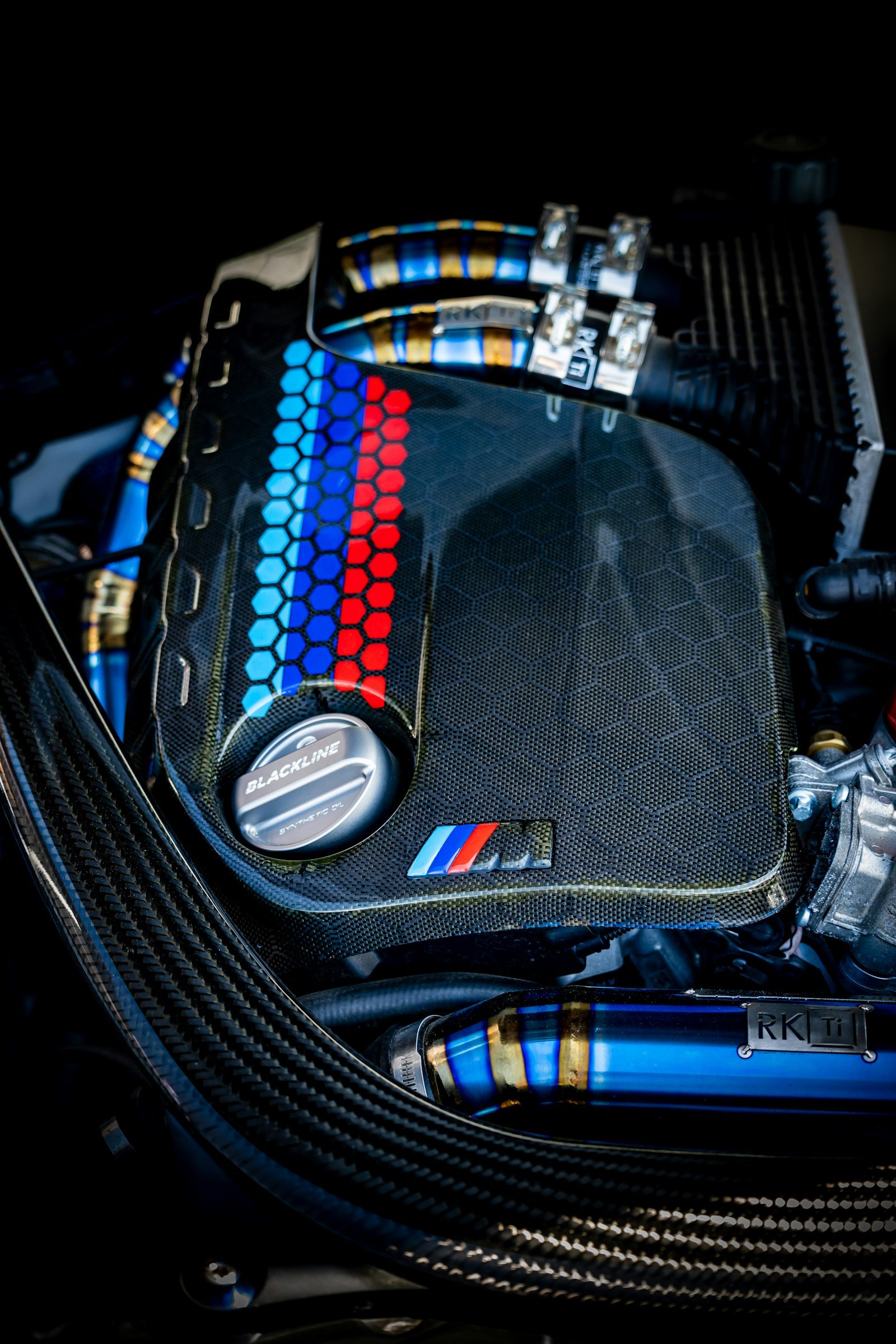
If you’re staring at a BMW that just threw a rod, spun a bearing, or grenaded a turbo, you already know the dealer quote is going to make your eyes water. That’s usually the point where people start searching for used BMW engines for sale instead of paying for a brand-new long block or a full rebuild. It’s the smarter move in most cases, and after handling engine swaps and shipments for BMW owners across dozens of countries, we’ve got a pretty good idea of what actually matters when you’re picking one out.
This guide walks through the BMW engine families we stock and sell most often, what the specs actually mean for your car, what to check before you hand over money to anyone (including us), and how the buying and shipping process works when you’re ordering a used engine from overseas.
Why People Choose Used BMW Engines Over New or Rebuilt
A brand-new BMW crate engine, if you can even source one, often costs more than the car is worth. A rebuild sounds cheaper on paper until the machine shop calls with a list of “while we’re in there” repairs — new pistons, a re-honed block, fresh bearings, a machined head — and the bill creeps past what a low-mileage used engine would’ve cost anyway.
A tested, low-mileage used BMW engine pulled from a donor car gives you factory-spec internals, factory tolerances, and none of the guesswork. That’s why the market for used BMW engines for sale has stayed strong even as parts prices climb everywhere else.
BMW Engine Families We Stock (With Real Specs)
BMW’s engine codes look intimidating until you know what they mean. Here’s a rundown of the engines we move most often, straight from current stock.
N54 — 3.0L Twin-Turbo Inline-6
The N54 is the engine that built BMW’s modern turbo reputation. It’s a 2,979cc inline-six with twin parallel turbochargers, direct injection, and a factory output of roughly 300-335 horsepower and 300-332 lb-ft of torque depending on the year and model (135i, 335i, 535i, Z4 sDrive35i). It ran from 2006 through about 2010 before BMW moved to the single-turbo N55, and it’s well documented on its Wikipedia engine page if you want the full production history. If you want an engine with a huge aftermarket and a well-documented history, the N54 3.0L twin-turbo engine in our inventory is a solid pick.
N55 — 3.0L Single-Turbo Inline-6
BMW simplified the twin-turbo setup into a single twin-scroll turbocharger with the N55, which cut down on failure points while keeping output close to the N54 — around 300-320 hp and 300-330 lb-ft. You’ll find it in the 335i, 435i, 535i, and X5/X6 xDrive35i, among others. We carry both the N55B30T0 and the standard N55B30 variant.
B58 — 3.0L Single-Turbo Inline-6
The B58 replaced the N55 and is, frankly, one of the most reliable modern turbo engines BMW has built. 2,998cc, single twin-scroll turbo, forged internals on most versions, roughly 320-382 hp depending on tune. Found in the 340i, 440i, M340i, Z4 M40i, and even the Toyota Supra. Check our B58B30O1 listing for current pricing and mileage.
S55 — 3.0L Twin-Turbo Inline-6 (M3/M4)
This is the M-division version, built for the F80 M3 and F82 M4. Twin turbos, forged crank, closed-deck block, and 425-444 factory horsepower. It’s a genuinely different animal from the N55 it shares a displacement with — stronger everywhere it counts. We keep a tested S55B30 in stock when available.
S65 — 4.0L Naturally Aspirated V8 (E90/E92 M3)
Before BMW went turbo on the M3, they built the S65 — a screaming 4.0L V8 that revs to 8,300 rpm and makes 414 hp with zero forced induction. It’s one of the last high-revving naturally aspirated V8s any manufacturer built for a road car, and used examples are getting harder to find in good condition. Our S65B44 listing has full compression test results if you want to see the numbers before buying.
B57 — 3.0L Inline-6 Diesel
BMW’s diesel inline-six shows up in three main flavors, and we carry all of them: the B57D30O0 (single turbo, around 265 hp), the B57D30B, and the B57D30S0 quad-turbo unit that pushes past 400 hp — the most powerful production diesel inline-six BMW has ever built. If you’re running an X5M50d, M550d, or 750d and need a diesel replacement, this is the family to know.
N20 — 2.0L Single-Turbo Inline-4
The N20 is BMW’s smaller four-cylinder turbo, found in the 328i, 528i, and X1/X3 sDrive28i. Around 240 hp and 260 lb-ft from just 1,997cc. It’s a common request from owners who want a factory-spec swap without paying six-cylinder money. See our N20B20 listing for what’s currently pulled and tested.
| Engine Code | Displacement | Configuration | Factory Power | Common Models |
|---|---|---|---|---|
| N54 | 3.0L | Twin-turbo I6 | 300-335 hp | 135i, 335i, 535i |
| N55 | 3.0L | Single-turbo I6 | 300-320 hp | 335i, 435i, X5/X6 |
| B58 | 3.0L | Single-turbo I6 | 320-382 hp | 340i, M340i, Supra |
| S55 | 3.0L | Twin-turbo I6 | 425-444 hp | F80 M3, F82 M4 |
| S65 | 4.0L | NA V8 | 414 hp | E90/E92 M3 |
| B57 | 3.0L | Turbo diesel I6 | 265-400+ hp | X5M50d, 750d |
| N20 | 2.0L | Single-turbo I4 | 240 hp | 328i, X1/X3 |
What to Check Before Buying a Used BMW Engine
We test every engine before it goes on the truck, but you should still know what a legitimate seller ought to be showing you. Here’s the short list we go through on every unit we list:
- Compression test across all cylinders, with numbers in writing, not just “it ran fine.”
- Mileage from the donor vehicle, pulled from the odometer or dash cluster, not estimated.
- Timing chain and guide condition — this matters a lot on N54/N55 engines specifically, since chain guides are a known wear item.
- Turbo condition — shaft play, oil residue at the seals, and whether the wastegate actuator moves freely.
- No signs of coolant in the oil, which usually means a cracked head or failed gasket on the donor car.
- Accident history of the donor vehicle — a front-end hit can bend accessory brackets or damage the oil pan even if the engine itself runs.
Any seller who can’t answer these questions with actual numbers is guessing, and you shouldn’t pay guessing-money for an engine that’s going back into a car you plan to drive for years. If you want to understand what a proper SAE-referenced compression and leak-down testing procedure actually involves, it’s worth a read before you buy from anyone.
Mileage and Warranty — What’s Reasonable
Most of the used BMW engines for sale in our inventory come off donor cars between 40,000 and 90,000 miles. That’s usually well within the useful life of a BMW turbo engine when it’s been maintained on schedule — oil changes every 5,000-7,500 miles with the right synthetic, not the extended 10,000-mile intervals some owners stretch to. We run compression and leak-down tests on everything before listing it, and we back stock with a warranty period so you’re not gambling your labor cost on a mystery unit.
Shipping a BMW Engine Anywhere in the World
A used engine is heavy, awkward, and expensive to ship badly. We crate every unit on a pallet, drain and seal the fluids for freight compliance, and ship via air or ocean freight depending on your location and timeline. Customers in Europe, the Middle East, Africa, and Southeast Asia order from us regularly, and we handle the export paperwork so customs clearance on your end is as simple as it can be. Ocean freight takes longer but costs less for bulkier engines like the S65 V8; air freight gets a four-cylinder like the N20 to you inside a couple of weeks in most cases.
Matching the Right Engine Code to Your Car
BMW reused engine families across multiple chassis codes, so the same N55, for example, shows up in the F30 335i and the F15 X5 with different oil pan and mounting configurations. Before you order, check your VIN against the engine code on your original block — usually stamped near the front of the engine or listed on a build sticker in the engine bay or door jamb. We double-check this with every customer before an engine ships, because the wrong sub-variant means wiring and mount headaches you don’t want to deal with mid-install.
Installation Notes Worth Knowing
Swapping a used BMW engine isn’t a weekend job for most people, and that’s fine — most of our customers use an independent BMW specialist rather than a dealer, which saves a substantial amount on labor. A few things that trip up first-time installers: the N54 and N55 both need their turbo oil and coolant lines bled properly or you’ll cook a bearing in the first week. The B58 needs its valve cover gasket replaced during install almost every time, since the factory gasket rarely survives removal. And on any BMW with variable valve timing (VANOS), get the solenoids tested separately — they’re a common failure point that has nothing to do with the engine itself but gets blamed on it anyway.
N54 vs N55 vs B58 — Which One Should You Actually Buy?
We get this question constantly, usually from someone shopping for a replacement or planning a swap into a different chassis. There’s no single right answer, but here’s how we’d break it down if it were our own car.
The N54 has the biggest aftermarket and the most proven tuning history — twenty years of forum knowledge, cheap upgraded fuel injectors, and a huge parts supply. The tradeoff is complexity. Two turbos means two of everything that can fail: two wastegates, two sets of oil and coolant lines, more vacuum hoses. If you want a project engine to build on and don’t mind maintenance, the N54 is still a great choice, and it’s why used BMW engines for sale in this family move fast when we get them in.
The N55 trades a bit of tuning headroom for simplicity. One turbo, fewer failure points, and it responds well to a basic tune without needing to touch the fuel system right away. For someone who wants a reliable daily driver rather than a project, this is usually the safer pick.
The B58 is, in our opinion, the best all-around choice if it fits your chassis. Forged internals from the factory on most versions mean it tolerates more boost before you’re into aftermarket rod territory, and BMW ironed out a lot of the N-series reliability quirks by the time this engine launched. It costs more up front, but the long-term cost of ownership tends to be lower.
Common Failure Points by Engine Family (So You Know What You’re Inheriting)
No used engine is risk-free, and honest sellers will tell you what to watch for instead of pretending the engine is perfect. Here’s what we flag to customers by family:
- N54: High-pressure fuel pump wear, injector fouling from carbon buildup (direct injection engines don’t get a fuel wash over the intake valves), and wastegate rattle at idle on higher-mileage units.
- N55: Timing chain guide wear past 100,000 miles, and the plastic coolant pipe under the intake manifold, which gets brittle with age and heat cycles.
- B58: Valve cover gasket seepage (largely a design issue that’s been improved on later revisions) and occasional VANOS solenoid faults.
- S55/S65: Rod bearing wear on high-mileage, hard-driven examples — this is exactly why we run compression and leak-down tests before listing, since these are performance engines that often lived a harder life than a commuter car.
- B57 diesel: DPF and EGR related carbon buildup, which is a maintenance issue on the donor vehicle rather than a core engine defect, but worth knowing before you buy.
None of this means avoid these engines. It means know what you’re buying and ask the seller for documentation, not just a photo and a price.
Used vs Rebuilt vs New: A Straight Cost Comparison
| Option | Typical Cost Position | What You’re Actually Getting |
|---|---|---|
| New/Crate Engine | Highest | Zero miles, full manufacturer warranty, often special-order only |
| Full Machine-Shop Rebuild | High, often close to new | Reman internals, but only as good as the block that came in and the shop doing the work |
| Tested Used Engine | Lowest of the three, by a wide margin | Factory tolerances, real-world mileage, verified compression, faster turnaround |
For most owners who aren’t restoring a collector car, the used engine route gets the vehicle back on the road for meaningfully less money, with less waiting around for parts and machine shop scheduling.
What’s Included When You Order From Us
Every used BMW engine we ship includes the long block, and depending on the listing, the wiring harness, ECU, turbo(s), and accessories needed for a complete swap — check the specific listing since this varies by engine code and what came off the donor car. We photograph the actual unit you’re buying, not a stock catalog photo, and we’re upfront in the listing about mileage, compression numbers, and any cosmetic wear on the block.
Frequently Asked Questions
How much does a used BMW engine cost?
Prices vary a lot by engine code and condition. A four-cylinder N20 typically runs less than a twin-turbo S55 or a low-mileage S65 V8. Check individual listings for current pricing since stock and mileage change weekly.
Do used BMW engines come with a warranty?
Yes, every engine we sell is tested and backed by a warranty period so you have coverage if something turns up after install.
Can I get a used BMW engine shipped outside the country I’m in?
Yes. We ship used BMW engines for sale worldwide, with export documentation handled on our end.
Is a used engine better than a rebuild?
For most daily-driver BMWs, yes — a tested low-mileage used engine usually costs less than a full rebuild and comes with factory tolerances instead of machine-shop variables.
What information should I have ready before ordering?
Your full VIN, the engine code currently in your car (check the build sticker or the stamping on the block), and whether you need the wiring harness and ECU included or just the long block. Having this ready cuts the back-and-forth down to one message instead of five.
Will a used BMW engine bolt straight in?
Usually, if the engine code and sub-variant match your original. Mounts, oil pan depth, and sensor placement can differ between chassis even within the same engine family, which is why we confirm fitment against your VIN before anything ships.
Do you test engines before shipping or just before listing?
Both. We run the compression and leak-down checks before an engine goes up for sale, and we do a final visual and fluid check right before it’s crated, since engines can sit in the warehouse for a while before someone orders them.
A Few Real Scenarios We See Often
A 335i owner with 140,000 miles on the original N54 finds out the high-pressure fuel pump failure took out cylinder 5 with it. Rather than pay for a partial teardown and repair on an engine that’s already worn, they order a 60,000-mile tested N54 instead and get another 100,000+ miles out of the car for less than the repair quote alone would’ve cost.
An M3 owner racing on weekends spins a rod bearing on their S65 after years of track days. They’re not interested in a rebuild that takes six weeks of shop scheduling — they want the car back for the next event. A tested used S65 with documented compression numbers gets them back on track in under two weeks including shipping.
A shop doing an engine swap into a non-BMW chassis needs a B58 with the harness and ECU included, since they’re building a custom wiring setup and don’t want to source those parts separately. We flag exactly what’s included on the listing so there’s no surprise when the crate shows up.
How Ordering Works, Start to Finish
- Find the engine code and listing that matches your car, or contact us with your VIN if you’re not sure.
- We confirm current stock, mileage, and compression numbers, and answer any fitment questions.
- You place the order and we schedule crating and freight based on your location.
- The engine ships with export paperwork handled on our end for international orders.
- You install (or your shop does) and you’re covered by the warranty period from delivery.
Final Word
Whether you’re chasing a blown N54 turbo, a spun bearing on an N55, or just want to drop a proven B58 into a project car, buying from a seller who actually tests and documents their used BMW engines for sale is the difference between a smooth install and a very expensive lesson. Browse our current BMW engine stock, check the compression numbers on the listing, and reach out if you need help matching an engine code to your VIN before you order.
Related Engine Guides
Posts Widget




Best Auto Motors
USA HERALD MAGAZINE INC
Buy the best quality engines from our website online and get a fast delivery within 6 days.
Copyright 2022.KlbTheme . All rights reserved
