


Used Engines for Subaru Outback: EJ25, FB25, EZ36D Buying Guide
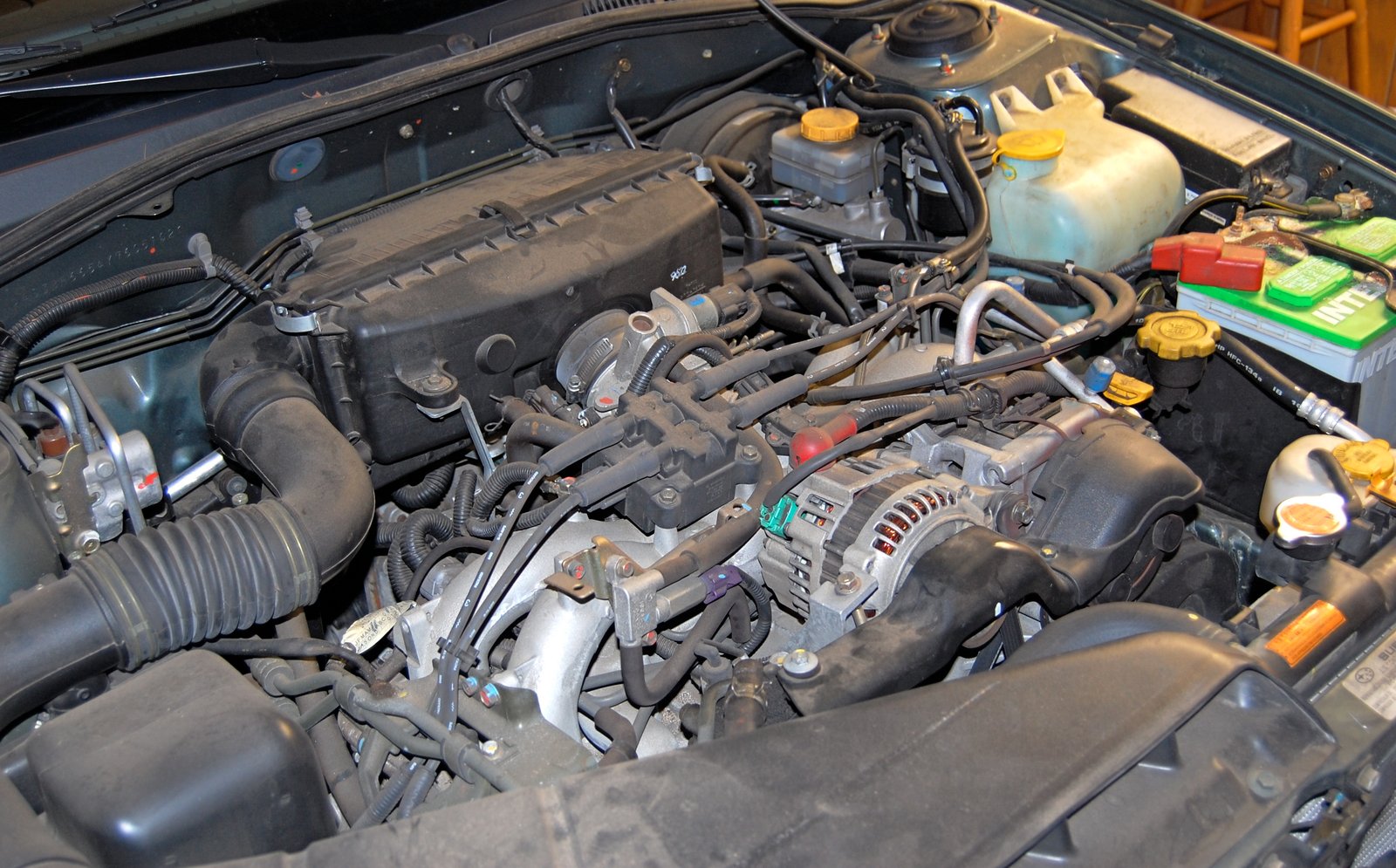
Boxer engines have a reputation, and it’s not always a flattering one. Low center of gravity, great handling, smooth idle – sure. But anyone who’s owned an Outback long enough eventually hears the words “head gasket” said in a tone that makes their stomach drop, or watches the oil level drop faster than it should between changes. If that’s why you’re here, you’re probably shopping for used engines for Subaru Outback models right now instead of another repair bill that doesn’t actually fix the underlying problem.
We pull, test, and ship used Outback engines to buyers everywhere, not just locally, and this guide is the version of “which engine do I actually need” that we’d tell you over the phone – not a rewritten spec sheet. Engine code, common failure points, real pricing, and what to check before you buy from anyone.
Which Engine Is Actually Under Your Outback’s Hood
The Outback has run three completely different engine families since Subaru turned it into its own model line, and mixing them up is the single most common mistake buyers make when shopping for used engines for Subaru Outback vehicles.
| Engine | Displacement | Approx. Power | Years / Notes |
|---|---|---|---|
| EJ25 (SOHC/DOHC flat-4) | 2.5L boxer-4 | 165-175 hp | 1996-2012, replaced by FB25 from 2010 onward on some trims |
| EZ30D (flat-6) | 3.0L boxer-6 | 212-245 hp | 2000-2009, H6 trims |
| EZ36D (flat-6) | 3.6L boxer-6 | 256 hp | 2010-2019, 3.6R trims |
| FB25 / FB25B / FB25D | 2.5L boxer-4 | 170-182 hp | 2010-present, direct injection from 2018 (FB25D) |
| FA24F (turbo) | 2.4L boxer-4 turbo | 260 hp | 2020-present, XT and Wilderness trims |
The confusing part is that the EJ25 and early FB25 look similar enough on paper that people assume they’re interchangeable. They’re not. Different block architecture, different accessory mounting, different ECU calibration entirely. When you’re sourcing used engines for Subaru Outback applications, matching the exact engine code – not just displacement – is the difference between a bolt-in swap and a shop billing you for a full afternoon of troubleshooting mismatched brackets.
How Generation Shapes What You’re Actually Buying
The Outback’s evolution matters more than most buyers expect when they start looking at used engines for Subaru Outback listings. The third generation (2005-2009) is where the EJ25 and EZ30D coexisted, giving buyers a genuine choice between four-cylinder efficiency and six-cylinder smoothness – and it’s also the generation where the head gasket issues on the EJ25 were most heavily reported, since Subaru hadn’t yet fully resolved the material problems. The fourth generation (2010-2014) introduced the FB25 alongside the EZ36D, phasing out the EJ over a couple of model years depending on trim, which is exactly why two Outbacks from 2011 can have completely different engines under the hood. Fifth generation (2015-2019) standardized on FB25 and EZ36D. The current sixth generation, from 2020 onward, dropped the six-cylinder entirely and introduced the FA24F turbo as the performance option alongside a direct-injection FB25D.
What this means in practice: if someone’s selling you “an Outback engine” without specifying the code, walk away or ask more questions. A 2010 could have either an EJ25 or an early FB25 depending on exactly when in the model year it was built, and those two engines share almost nothing beyond bolt pattern similarities. VIN decoding removes the guesswork entirely, and it’s the first thing we check before quoting anyone.
Where These Engines Actually Break
The EJ25 is the one with the reputation, and it’s earned, at least for the pre-1999 and certain mid-2000s builds. Head gasket failure is the recurring theme – the factory gasket material on early EJ25s wasn’t up to the job, and external coolant leaks around the heads, or worse, internal leaks that mix coolant into the oil, show up commonly in the 90,000-150,000 mile range. Subaru revised the gasket material more than once, and later EJ25 builds (roughly 2003 onward) are noticeably better, but the reputation stuck to the whole engine family regardless of year.
The FB25 fixed most of the EJ25’s head gasket problems, and it’s a genuinely more durable engine in that regard. What it introduced instead was an oil consumption issue on early builds (2011-2014 roughly), traced to piston ring design – Subaru actually extended warranty coverage on a chunk of these engines after a class-action settlement. If you’re looking at an FB25 with unknown history, checking oil consumption is worth more than checking mileage alone.
The EZ30D and EZ36D flat-sixes are a different animal – smoother, more powerful, and mechanically solid, but they’re less common on the used market simply because fewer were sold relative to the four-cylinder Outbacks, and finding used engines for Subaru Outback H6 models specifically takes more searching. When they do fail, it’s usually cooling system related rather than an inherent design flaw – a neglected water pump or thermostat causing overheating damage, not the engine giving up on its own.
The newer FA24F turbo is still building a track record, but early data points to it being more robust under boost than the old EJ-based turbo engines from Subaru’s WRX lineage, with better reliability margins according to tuners who’ve worked with both platforms.
Signs Yours Might Be On The Way Out
Sweet-smelling coolant loss with no visible puddle under the car is the classic head gasket tell on an EJ25 – it’s burning off internally rather than leaking onto your driveway. White exhaust smoke that doesn’t clear up as the engine warms, combined with a rising temp gauge, points the same direction. On the FB25, it’s usually simpler: check the oil level monthly and if it’s dropping a quart every 1,000-1,500 miles with no visible external leak, you’re looking at the known ring issue, and it typically gets worse rather than better. A rough idle paired with a check engine light for a misfire, especially on one specific cylinder repeatedly, often traces back to a failing ignition coil rather than the engine itself – worth ruling out before you assume you need a full replacement.
What a Replacement Actually Costs
A new Subaru crate engine runs anywhere from $5,500 to $8,500 depending on which one, not including labor. A professional rebuild lands somewhere around $3,000-$4,800. Used engines for Subaru Outback buyers typically pay $900-$2,200 for the engine itself, with EJ25s generally on the lower end and the EZ36D flat-six commanding more due to lower supply.
Given that a lot of Outbacks on the road are worth somewhere between $6,000 and $15,000, spending dealer-level money on a brand-new crate engine rarely makes sense unless you’re planning to keep the car another decade. A tested used engine with moderate mileage, backed by an actual warranty, gets most owners the rest of the vehicle’s useful life for a fraction of the dealer quote.
What We Check Before an Outback Engine Ships
- Compression test on all cylinders – flags ring or valve issues before you ever see the engine.
- Coolant system pressure test – specifically looking for the head gasket failures the EJ25 is known for.
- Oil consumption history where available – especially important on FB25 units from the affected production years.
- VIN match against the donor vehicle – confirms the exact engine code, not a guess from displacement.
- Visual inspection through valve covers – sludge or metal shavings are an automatic disqualifier.
Anyone selling used engines for Subaru Outback models should be willing to tell you these numbers, not just hand you a stock photo and a price. If they can’t answer basic questions about compression or coolant testing, that’s a red flag worth taking seriously.
A Real Example
A customer with a 2009 Outback 2.5i came to us after his mechanic diagnosed a blown head gasket at 142,000 miles, with the dealer quoting nearly $7,800 for a new engine and labor combined. We sourced a low-mileage EJ25 out of a donor Outback with 68,000 miles, pressure-tested the cooling system, verified compression across all four cylinders, and shipped it with the intake manifold and wiring harness attached. Total cost including freight landed under $1,900, and his independent shop had it swapped in about nine hours. That kind of outcome is fairly typical for buyers going this route rather than paying full dealer pricing.
The Turbo Question
A fair number of buyers ask whether it’s worth upgrading to a turbocharged FA24F while they’re already replacing the engine, rather than sticking with the naturally aspirated FB25 the car came with. Mechanically it’s possible on the newer platform, but it’s not a simple parts swap – the ECU, wiring harness, fuel system, and in some cases the transmission calibration all need to match, which turns a straightforward used engines for Subaru Outback replacement into a much bigger project with real tuning costs on top. For most owners just trying to get a reliable engine back under the hood at a fair price, matching the original engine code is the simpler and cheaper path, and it’s what we’d recommend unless you’re specifically chasing more power and have a shop that’s done this swap before.
Installation Notes
Same-generation swaps are usually straightforward – an EJ25 from one Outback bolts into another with the same code without drama. Where it gets complicated is crossing from EJ to FB, or four-cylinder to flat-six; different transmission bellhousing patterns, different engine mounts, and completely different wiring harnesses mean that’s a much bigger job than a straight swap, and not something most shops will quote casually without seeing the car first.
Give your mechanic the exact engine code, not just “the Outback engine.” If you bought used engines for Subaru Outback applications from a seller who confirmed the code against your VIN, this step is already done for you. Labor typically runs 7-14 hours depending on whether the engine arrives as a long block or a more complete unit with accessories already attached.
Oil and Maintenance Habits That Actually Matter
Subaru specifies 0W-20 for most FB25 applications and 5W-30 for older EJ25 engines, though this varies by model year – check your specific owner’s manual rather than assuming. Sticking to a 5,000-7,500 mile interval with quality synthetic oil matters more on these boxer engines than on a lot of inline configurations, partly because the horizontally-opposed layout makes oil circulation patterns slightly different and partly because Subaru’s own service intervals assume it. A used engine dropped into a car that then goes right back to stretched oil changes and ignored coolant top-offs won’t outlast the one it replaced by much.
Things Buyers Forget to Ask About
Accessories trip up more people after the sale than anything else. Some used engines for Subaru Outback listings include the intake manifold, alternator, and complete wiring harness; others are a bare long block. If your current accessories are healthy, a long block is the cheaper route and there’s no reason to pay extra for parts you already have. If your Outback’s been sitting with a dead engine for months, or whatever caused the failure also damaged surrounding components, paying more for a complete engine avoids the headache of sourcing individually used accessories from a different donor vehicle that may not match perfectly.
Ask about return policy before you pay, specifically what happens if the engine arrives with shipping damage. Get that answer in writing. Photographing the engine before it’s crated and again once you’ve uncrated it protects both sides if a dispute ever comes up.
Worldwide Shipping
We ship Outback engines internationally as a normal part of business, with proper crating and customs documentation handled up front rather than figured out after you’ve already paid. If you’re outside the country the engine ships from, ask for a landed cost quote – engine, crating, and freight combined – before committing, so there’s no surprise fee waiting at customs.
Warranty Terms Worth Insisting On
A minimum 90-day warranty should be the floor for any used engine purchase, with longer terms available on more thoroughly tested units. Get the terms in writing before you pay anything, and confirm specifically what’s covered – internal failures are usually standard, but gaskets, sensors, and labor costs are handled differently seller to seller, so ask rather than assume.
Frequently Asked Questions
How much do used engines for Subaru Outback models cost?
Typically $900 to $2,200 for the engine itself depending on which engine code, mileage, and whether accessories are included, not counting shipping or labor.
Is the head gasket problem on every EJ25?
No. It’s most common on pre-2003 builds. Subaru revised the gasket material multiple times, and later EJ25s are meaningfully more reliable, though the reputation covers the whole family in most people’s minds.
Can an EZ36D six-cylinder replace a four-cylinder EJ25 or FB25?
Not as a simple swap. The mounts, wiring harness, and transmission bellhousing pattern differ enough that it’s a much larger job than matching engine codes within the same family.
Does the engine come with a warranty?
Any reputable seller of used engines for Subaru Outback vehicles should offer at least a 90-day written warranty, with longer options typically available.
What’s Currently In Stock
Outback-compatible engines rotate through our broader used engines category regularly. We currently carry the Subaru EJ25 engine, which also covers the S401 and S402 variants if you’re cross-shopping performance applications. Check that listing directly for current mileage and pricing, since stock changes as engines come in and ship out.
Bottom Line
Buying used engines for Subaru Outback models comes down to knowing your exact engine code, understanding which failure pattern applies to it, and buying from someone who tests before they list rather than after you complain. We verify compression, pressure-test the cooling system, and match VINs against donor vehicles before anything ships, and we send engines worldwide with real freight documentation. Send us your VIN or engine code and we’ll tell you what’s available and what it costs to get it to your door.
Related reading: our guides on used engines for Kia Sorento, used engines for Mazda CX5, used engines for Nissan Altima, used diesel engines, and searching real engine inventory online cover similar ground if you’re comparing options across other makes.
For deeper technical background on the EJ and FB engine families, Wikipedia’s entries on the Subaru EJ engine and Subaru FB engine are solid references, and the NHTSA website is worth checking for any open recalls tied to your specific model year.
Posts Widget




Best Auto Motors
USA HERALD MAGAZINE INC
Buy the best quality engines from our website online and get a fast delivery within 6 days.
Copyright 2022.KlbTheme . All rights reserved
