


Used Engines for Audi A4: EA888 Generations Buying Guide
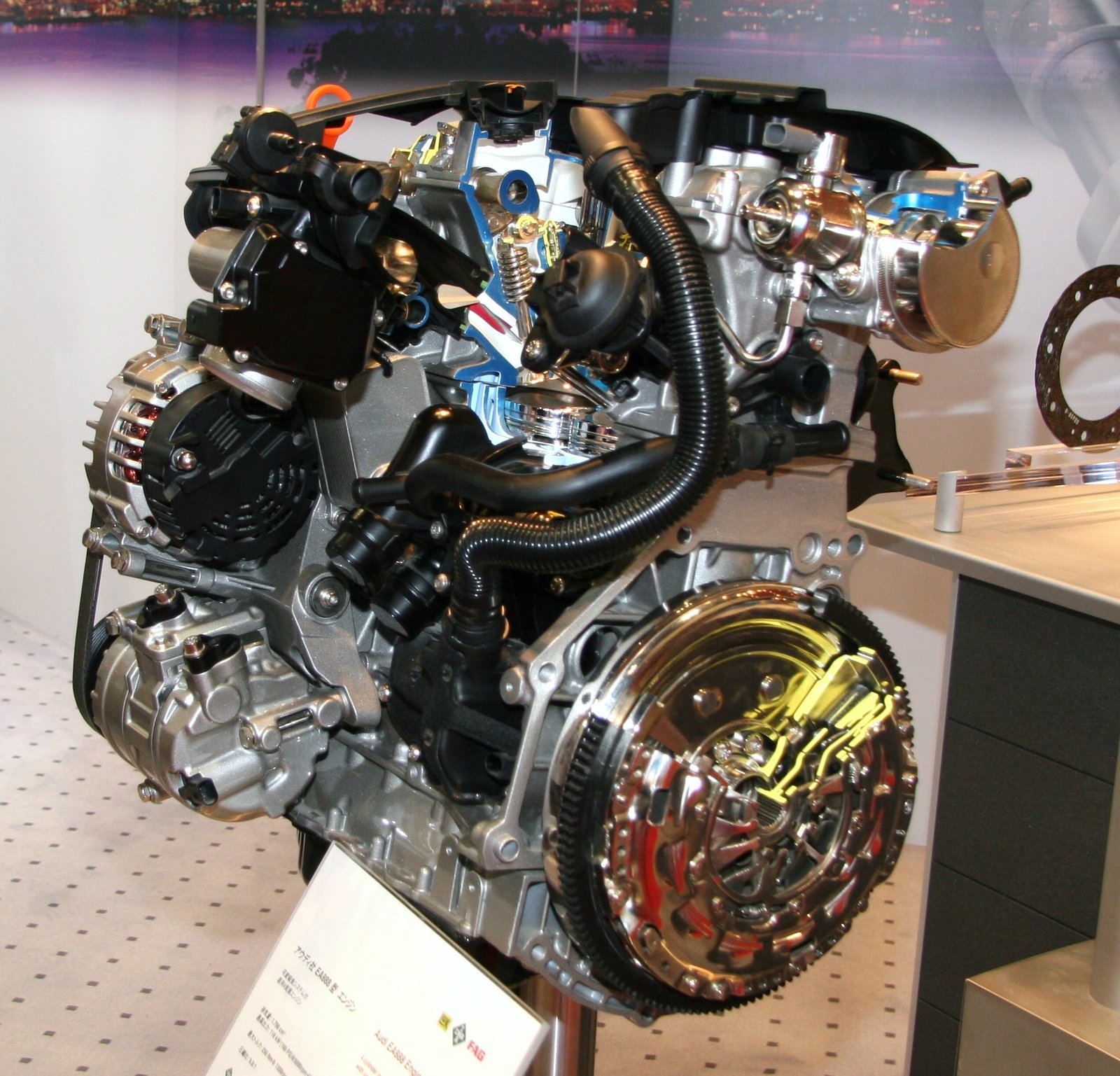
An Audi dealer quote for a new A4 engine is the kind of number that makes people start Googling at midnight. Between the badge premium and the fact that Audi service departments don’t exactly compete on price, a lot of A4 owners end up staring at a repair estimate that costs more than the car is worth on paper. That’s usually the moment someone starts searching for used engines for Audi A4 models instead of signing off on a bill that doesn’t make financial sense.
We source, test, and ship used A4 engines to buyers everywhere, not just around the corner, and this is the version of the conversation we’d have with you on the phone – which engine you actually have, what tends to go wrong with it, what a fair price looks like, and what to check before you buy from anyone, including us.
Which Engine Is Actually In Your A4
Audi has run the A4 on the EA888 turbo four-cylinder platform for most of the last fifteen years, but “EA888” isn’t one engine – it’s a family that changed enough between generations that parts don’t always cross over cleanly. Add in the earlier V6 options and the diesel variants sold outside North America, and figuring out exactly which used engines for Audi A4 models will actually fit yours takes more than just reading the trim badge.
| Engine | Displacement | Approx. Power | Generation / Years |
|---|---|---|---|
| EA888 Gen 1 (BPY, CAEB) | 2.0L turbo I4 | 200-211 hp | B7/early B8, 2006-2012 |
| EA888 Gen 2 (CAEB, CCTA) | 2.0L turbo I4 | 211-220 hp | B8, 2008-2012 |
| EA888 Gen 3 | 2.0L turbo I4 | 220-252 hp | B8.5/B9, 2012-2019 |
| EA888 Gen 3B | 2.0L turbo I4 | 201-261 hp | B9 facelift, 2019-present |
| 3.2L FSI V6 | 3.2L V6 | 255 hp | B8 only, 2008-2009 |
| 3.0T EA839 / EA837 supercharged V6 | 3.0L V6 | 272-333 hp | Various trims, 2009-present |
| 3.0 TDI V6 diesel | 3.0L V6 turbo-diesel | 218-282 hp | Export markets, B8/B9 |
The single biggest mistake buyers make is assuming any “2.0T” will bolt in. It won’t. Gen 1 and Gen 2 EA888 engines share a cast-iron block and single-scroll turbo layout that’s meaningfully different from the aluminum-block Gen 3, which itself differs from the Gen 3B found in facelifted B9 models with mild-hybrid compatibility. Read the engine code stamped on the block, or better yet, decode your VIN before you commit to buying used engines for Audi A4 applications from anyone.
Signs Yours Might Be On The Way Out
A rattling noise on cold startup that fades after a few seconds is one of the first signs of timing chain tensioner wear on the earlier EA888 generations – it’s easy to dismiss as “normal turbo noise” until it isn’t. A check engine light for cylinder misfires that comes and goes, especially under load, often points to carbon-fouled intake valves rather than anything more serious, though it’s worth confirming with a compression or leak-down test rather than assuming. Oil level dropping noticeably between changes, even without a visible leak, is common enough across EA888 generations that it’s one of the first questions we ask customers before quoting a replacement. On the diesel V6, a check engine light paired with reduced power mode almost always traces back to the EGR or DPF system rather than the engine’s core components, and by the time it throws a code, some damage may already be done.
Where A4 Engines Actually Fail
The early EA888 – Gen 1 and Gen 2, found in B7 and early B8 cars – has a reputation that’s well earned. Timing chain tensioner failure is the big one; if it lets go, the chain can jump time and bend valves, turning what should be a routine repair into a full engine-out job. Excessive oil consumption is the other recurring complaint, often tied to worn piston rings, and it’s common enough that Audi extended warranty coverage on a portion of these engines in some markets. Carbon buildup on the intake valves, a byproduct of direct injection with no port injection to help wash them clean, shows up as rough idle and hesitation typically in the 60,000-90,000 mile range and needs a walnut-blast cleaning to fully resolve.
The Gen 3 EA888, standard in B8.5 and early B9 A4s, fixed a lot of these issues with a stronger aluminum block and improved turbo mapping, but it didn’t eliminate carbon buildup entirely – it’s still a direct-injection engine, and intake valve cleaning is still a maintenance item you should plan for, just less urgently than on the earlier generations. Water pump and thermostat housing failures are common complaints on this generation too, generally showing up as unexplained coolant loss.
The 3.0 TFSI supercharged V6, when it appears in A4 trims, is a genuinely different animal mechanically and tends to be more durable than the four-cylinder, though supercharger belt and pulley wear becomes a maintenance item around 80,000-100,000 miles. The 3.0 TDI diesel is solid when properly maintained but sensitive to EGR fouling and DPF issues in stop-and-go city driving, similar to most modern diesels.
How Generation Actually Changes What Fits
The B7 A4 (2005-2008) is mostly EA888 Gen 1 territory in the US, with the 3.2 FSI V6 available briefly. The B8 (2008-2012) introduced Gen 2 EA888 as the sole engine after 2009 when the 3.2 V6 was dropped. The B8.5 facelift (2012-2016) moved to Gen 3 EA888, a meaningfully stronger unit. The current B9 generation (2016-present) uses Gen 3 initially, then Gen 3B from the 2020 facelift onward with mild-hybrid compatibility. This matters because used engines for Audi A4 buyers sometimes assume a “B8 2.0T” is one thing, when a 2009 B8 and a 2012 B8 can have meaningfully different EA888 generations under the same body style depending on exactly when they were built.
Cross-shopping with Volkswagen is common too, since the EA888 also powers the Golf GTI, Passat, and Tiguan – but Audi-spec tunes, wiring, and in some cases turbo hardware differ from the VW-spec versions of the same base engine code, so don’t assume a Golf engine drops straight into an A4 even when the displacement and generation match.
What a Replacement Actually Costs
A new engine through an Audi dealer for an A4 can run anywhere from $8,000 to well over $14,000 depending on the engine and generation, before labor – and Audi labor rates aren’t cheap either. A professional independent rebuild lands somewhere around $5,000-$7,500. Used engines for Audi A4 buyers typically pay $1,800-$4,500 depending on generation, mileage, and whether the supercharged V6 or standard 2.0T is involved, with the 3.0T commanding a real premium due to lower supply.
Given how many A4s on the used market sit in the $9,000-$18,000 range, the dealer route for a new engine rarely pencils out unless the car has genuine sentimental or collector value. A tested used engine with documented mileage and a real warranty typically gets owners the rest of the car’s useful life for a fraction of what the dealer quotes.
What We Check Before an A4 Engine Ships
- Compression test on all cylinders – catches ring wear or valve damage before it becomes your problem.
- Timing chain and tensioner inspection – specifically for Gen 1/Gen 2 EA888 units, given how common this failure is.
- Oil consumption history where available – a known issue across multiple EA888 generations.
- VIN cross-reference against the donor vehicle – confirms exact engine code and generation, not a guess from displacement.
- Visual inspection through the valve cover and oil fill – sludge or carbon buildup gets flagged before the engine ships.
If a seller of used engines for Audi A4 models can’t answer questions about timing chain condition or compression numbers, that’s worth pausing over. A cheap EA888 that turns out to have a stretched timing chain isn’t cheap once a shop has to pull it back out.
A Real Example
A customer with a 2013 A4 2.0T, Gen 3 EA888, came to us after a dealer diagnosis of a failed water pump that had led to overheating and head damage at 96,000 miles. The dealer quote for a new engine and labor topped $11,000. We sourced a used Gen 3 EA888 from a donor A4 with 74,000 miles, verified compression and timing chain condition, and shipped it with the intake manifold and wiring harness attached for just under $3,100 including freight. His independent European specialist shop had it installed in about twelve hours. Not every case lines up this cleanly, but it’s a fairly representative outcome for buyers who go this route instead of paying full dealer pricing.
Quattro, Transmission, and What Else Has to Match
Quattro all-wheel-drive A4s and front-wheel-drive A4s (where FWD was offered) sometimes use different engine tunes and accessory mounting even within the same base EA888 code, since the transmission and driveline layout affect ECU calibration and occasionally oil pan design on longitudinally-mounted applications. If your A4 is quattro, make sure whoever you’re buying used engines for Audi A4 vehicles from confirms the donor car was also quattro-equipped with the matching transmission type – S tronic dual-clutch versus the older Multitronic CVT versus a conventional automatic all pair differently with specific EA888 calibrations, and mismatching them can cause drivability issues even after a mechanically successful swap.
Installation Notes
Same-generation EA888 swaps within the A4 lineup are generally straightforward, assuming the engine code matches. Crossing generations – putting a Gen 3 into a car built for Gen 1 or Gen 2 – involves different engine mounts, different wiring harness pinouts, and ECU compatibility issues that turn a routine swap into a much bigger project most independent shops won’t quote without seeing the car first.
Give your mechanic the specific engine code, not just “the 2.0T.” If you sourced used engines for Audi A4 applications from a seller who verified the code against your VIN, this part is already handled. Labor for the swap itself typically runs 10-16 hours depending on whether the engine arrives with accessories attached or as a bare long block requiring parts transfer.
Oil and the Maintenance Habits That Actually Matter
Audi specifies VW 502.00/504.00-rated 5W-30 or 5W-40 synthetic oil depending on model year and engine generation – using anything off-spec is a common way to accelerate turbo and timing chain wear on these engines. Sticking to a 5,000-7,000 mile interval, tighter than Audi’s official “flexible” service schedule in some markets, matters a lot on direct-injection turbo engines like the EA888. A used engine dropped into a car that goes right back to stretched service intervals won’t last much longer than the one it replaced.
Things Buyers Forget to Ask About
Accessories are the detail that catches people out after the fact. Some used engines for Audi A4 listings include the turbocharger, intake manifold, and wiring harness; others are a bare long block. If your existing turbo and accessories are healthy, a long block saves real money. If the failure damaged surrounding components, or the car’s been sitting a while, paying more for a complete unit avoids sourcing mismatched used parts from a different donor car later.
Confirm the return policy before paying, specifically what happens with shipping damage, and get it in writing. Photograph the engine before crating and again on arrival – it protects both sides if a dispute comes up.
Worldwide Shipping
We ship A4 engines internationally as standard practice, with proper crating and customs paperwork prepared up front. If you’re outside the shipping country, ask for the full landed cost – engine, crating, and freight together – before you commit, so nothing unexpected shows up at customs.
Warranty Terms Worth Insisting On
A 90-day warranty should be the baseline for any used engine purchase, with longer terms available on more thoroughly tested units. Get it in writing before paying, and confirm exactly what’s covered – internal component failure is standard across most sellers, but gaskets, sensors, and labor costs vary, so ask directly rather than assume.
Frequently Asked Questions
How much do used engines for Audi A4 models cost?
Typically $1,800 to $4,500 for the engine itself depending on generation, mileage, and whether it’s the standard 2.0T or the supercharged 3.0T V6, not including shipping or labor.
Will a Gen 3 EA888 fit a car that came with Gen 1 or Gen 2?
Not directly. Mounts, wiring harness connectors, and ECU compatibility differ enough between generations that it’s a much bigger job than a same-generation swap.
Can I use a Volkswagen EA888 engine in my Audi A4?
Sometimes the base hardware is close, but Audi-spec tuning, wiring, and occasionally turbo hardware differ from VW-spec versions, so it needs to be verified case by case rather than assumed.
Does the engine come with a warranty?
Any reputable seller of used engines for Audi A4 vehicles should offer at least a 90-day written warranty, with longer options typically available on tested units.
What’s Currently In Stock
A4-compatible engines move through our broader used engines category and our dedicated Audi Engine category. We currently carry the 3.0T EA839 engine and the EA837 supercharged 3.0T engine, both compatible with several A4 supercharged V6 applications. Check those listings directly for current mileage and pricing since stock changes regularly.
Bottom Line
Buying used engines for Audi A4 models comes down to knowing your exact engine generation, understanding the failure pattern tied to it, and buying from a seller who tests before listing rather than after you complain. We verify compression, inspect timing chains, and match VINs against donor vehicles before anything ships, and we send engines worldwide with proper freight documentation. Send your VIN or engine code and we’ll tell you what’s available and what it costs delivered.
Related reading: our guides on used engines for Volkswagen Golf (same EA888 family), used engines for Subaru Outback, used BMW engines, used V8 engines, and buying used engines online with worldwide shipping cover similar ground for other German and performance makes.
For deeper technical background on this engine family, Wikipedia’s overview of the Volkswagen Group EA888 engine is a solid reference, and the NHTSA website is worth checking for any open recalls tied to your specific model year before you buy or install anything.
Posts Widget




Best Auto Motors
USA HERALD MAGAZINE INC
Buy the best quality engines from our website online and get a fast delivery within 6 days.
Copyright 2022.KlbTheme . All rights reserved
